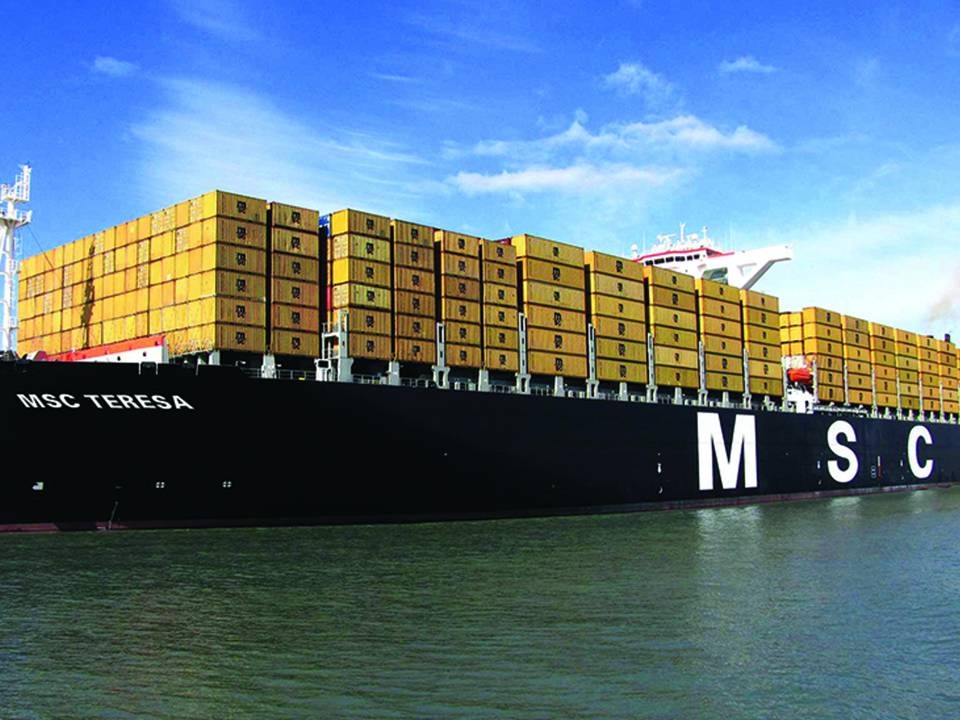





Mediterranean Shipping Company (MSC) has announced the implementation of Emergency Fuel Surcharges (EFS) effective March 16, 2026, until further notice. The surcharges apply to cargoes from Northern Europe and ScanBaltic routes to East Africa and the Red Sea, with specific rates for dry and reefer containers.
MSC has clarified its latest tariff adjustments, introducing Emergency Fuel Surcharges on select trade routes beginning March 16, 2026. The company stated that the surcharge is necessary to offset rising fuel costs and ensure operational sustainability across long-haul shipping routes.
For cargoes from Northern Europe, including I-JK routes, to the East, the EFS will be applied without a specified rate disclosed in the initial announcement. From ScanBaltic to East Africa, the surcharge is set at $75 per dry TEU and $120 per reefer TEU. Meanwhile, cargoes from ScanBaltic to the Red Sea will incur $50 per dry TEU and $75 per reefer TEU.
Industry analysts note that such surcharges are common in global shipping when fuel price volatility impacts operating margins. The move is expected to influence freight costs for exporters and importers, particularly in energy-sensitive trade lanes.
Key Highlights
-
MSC introduces Emergency Fuel Surcharge effective March 16, 2026
-
Applies to cargoes from Northern Europe and ScanBaltic routes
-
East Africa surcharge: $75 dry TEU, $120 reefer TEU
-
Red Sea surcharge: $50 dry TEU, $75 reefer TEU
-
Measure aims to offset rising fuel costs and sustain operations
Sources: Reuters, Economic Times, Business Standard, Moneycontrol