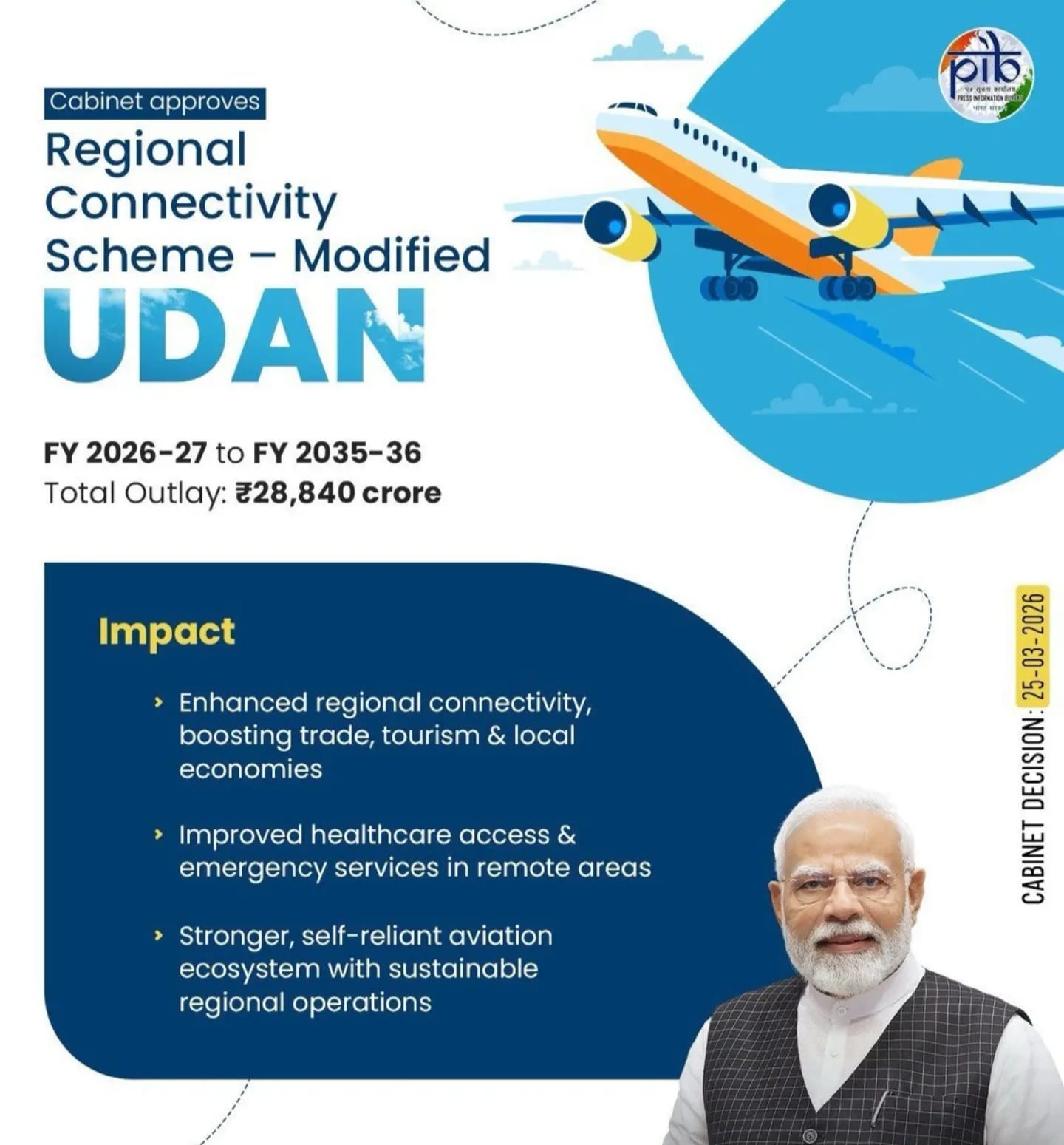





In a major push for aviation infrastructure, the Union Cabinet has approved the modified UDAN (Ude Desh ka Aam Naagrik) scheme, targeting the development of 100 airports with an investment exceeding Rs 28,000 crore. This initiative aims to enhance regional air connectivity across underserved areas, fostering economic growth and tourism.
The approval comes at a pivotal time for India's aviation sector, as air travel demand surges post-pandemic.
Prime Minister Narendra Modi's government has prioritized expanding airport infrastructure to make flying accessible to millions in remote regions.
UDAN Scheme Expansion Details
The Regional Connectivity Scheme, popularly known as UDAN, launched in 2017, now enters its next phase with significant modifications. The Cabinet's decision allocates over Rs 28,000 crore for developing 100 airports, including new greenfield projects and upgrades to existing airstrips. This will prioritize tier-2 and tier-3 cities, aligning with the vision of a $5 trillion economy by improving logistics and passenger mobility. Key focus areas include Northeast India, hilly regions, and aspirational districts, where air links remain limited.
Strategic Goals and Economic Impact
The modified UDAN scheme emphasizes viability gap funding, where the government covers up to 50% of losses for airlines operating unprofitable routes. It extends concessions on landing fees and taxes, making regional flights more affordable-often under Rs 2,500 per hour of flight. Experts predict this will generate over 2 lakh direct and indirect jobs, stimulate tourism, and cut travel times, boosting GDP contributions from aviation, currently at 2.5% and projected to reach 5% by 2030.
Key highlights
-
India's 100th airport under UDAN will connect remote areas like Andaman & Nicobar and Ladakh
-
Total investment: Rs 28,000+ crore over five years
-
Targets 50 lakh additional passengers annually on regional routes
-
Viability Gap Funding up to 50% for loss-making RCS routes
-
Prioritizes sustainable aviation fuel and eco-friendly airport designs
This development positions India as a global aviation hub, rivaling Southeast Asian networks.
Sources: Press Information Bureau (PIB), Ministry of Civil Aviation, Government of India