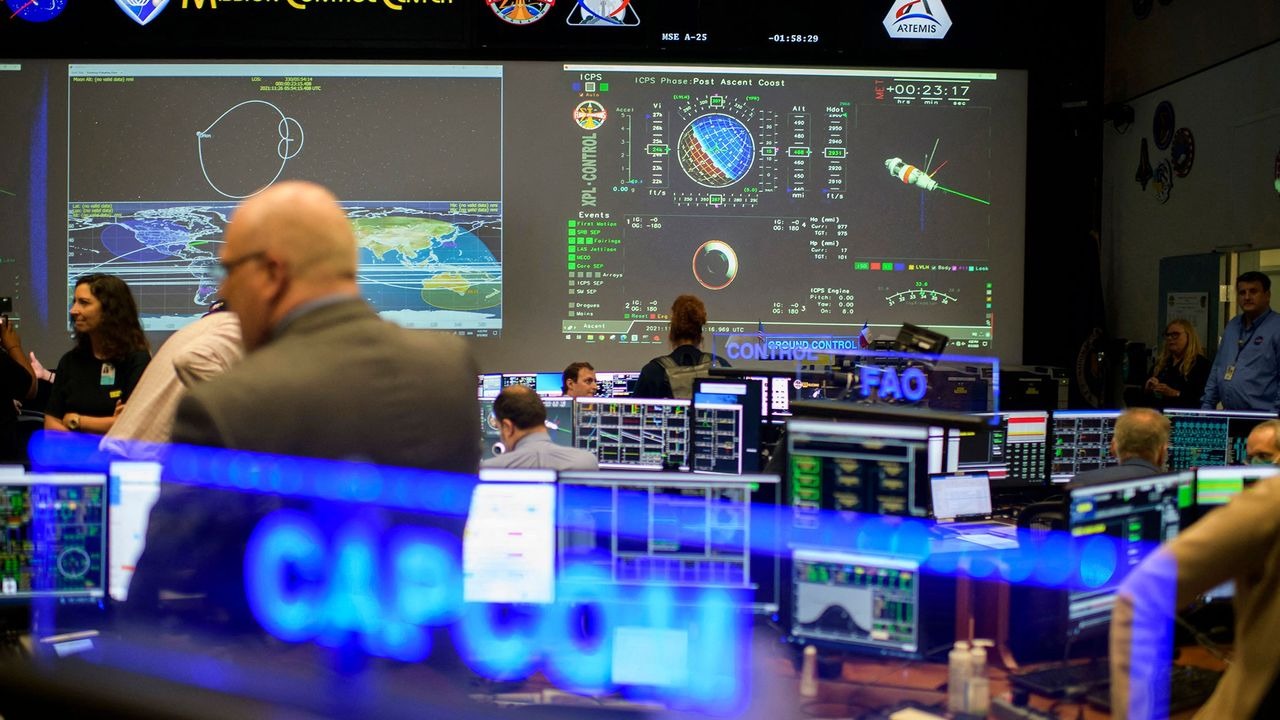





NASA’s Artemis program has inaugurated its state-of-the-art mission control centre, described as the “nerve centre” of the new lunar mission. This facility will oversee every aspect of Artemis II, the first crewed flight around the Moon, ensuring safety, communication, and real-time monitoring of spacecraft operations.
As humanity prepares for its return to the Moon, mission control has become the operational backbone of Artemis. Engineers, flight directors, and support teams are working around the clock to coordinate the mission, which marks a pivotal step toward long-term lunar exploration and eventual crewed missions to Mars.
Role Of Mission Control
The nerve centre is responsible for monitoring real-time telemetry, issuing commands, and ensuring astronaut safety. Teams have trained extensively for scenarios ranging from launch to lunar orbit and re-entry, making this facility the heartbeat of the mission.
Crew Experience
During parts of the mission, astronauts will lose direct contact with Earth as they orbit the far side of the Moon. For the crew, this period will be a highlight, offering a rare chance to witness lunar landscapes never seen before with human eyes.
Future Implications
Artemis II is not just about reaching the Moon it lays the foundation for deeper space exploration. The mission control centre’s success will be critical in shaping future lunar bases and eventual Mars expeditions.
Key Highlights
-
NASA inaugurates Artemis mission nerve centre
-
Facility oversees flight, safety, and communications
-
Artemis II to send astronauts around the Moon
-
Crew to witness unseen lunar landscapes
-
Mission lays groundwork for Mars exploration
Sources: NASA, Sheffield Press, Europe Says