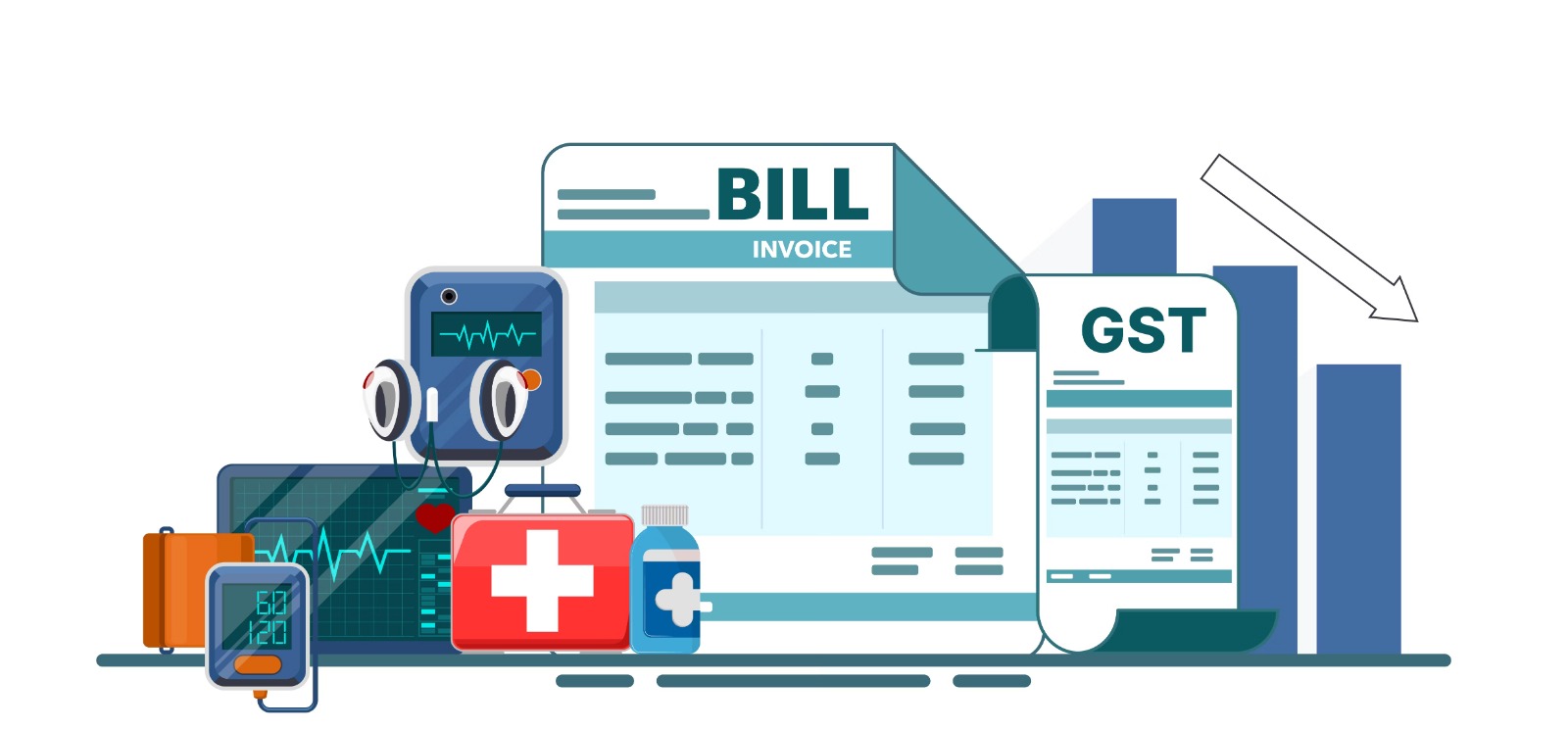
India's most sweeping tax overhaul since 2017 is now reshaping every corner of the healthcare sector. From zero-tax health insurance to exemptions on 33 life-saving medicines, GST 2.0 — effective September 22, 2025 — is designed to make medical care dramatically more accessible for millions of Indian patients and families.
The introduction of GST 2.0 marks a generational shift in how India taxes healthcare. The GST Council during its 56th meeting approved next-generation reforms moving towards a simplified two-rate system of 5% and 18%, with a higher 40% demerit rate applying only to luxury and sin goods — marking the most comprehensive GST rate overhaul since GST was introduced. Healthcare sits at the very heart of this transformation, with changes so fundamental that they are already reshaping costs for patients, insurers, hospitals, and pharmaceutical manufacturers simultaneously.
The Insurance Breakthrough That Changes Everything
The single most impactful reform for Indian households is the complete elimination of GST on health insurance premiums. The GST Council has exempted individual health and life insurance policies — including ULIPs, endowment plans, and family floater plans — from GST entirely, making insurance coverage significantly more affordable for millions of Indians, and putting India among the more progressive nations in terms of insurance taxation.
The financial benefit is immediate and substantial — previously, a family paying ₹50,000 annually for health insurance would bear an additional ₹9,000 GST burden, and with the new reforms, this entire amount is saved, making insurance 18% cheaper overnight. Critical illness insurance has been included under this exemption as well, extending relief to India's most financially vulnerable patients.
Medicines, Devices, And The Zero-Tax Revolution
In healthcare, 33 lifesaving medicines have been exempted from GST entirely, while spectacles for vision correction will now attract just 5% instead of 28%.
Cancer medicines and rare disease drugs have been reduced from 5% to 0% GST, while medical equipment including thermometers, medical oxygen, and diagnostic kits now attract zero tax — collectively lowering the cost of care across diagnosis, treatment, and recovery.
Under the revised framework, most medical devices and medicines are now taxed at 5%, making healthcare products broadly more affordable even where full exemption has not been granted.
The Compliance Challenge Hospitals Cannot Ignore
Despite the overwhelmingly positive patient-facing reforms, the transition presents significant operational challenges for healthcare businesses. While the GST rate cuts have reduced the tax burden on products such as insulin, cancer drugs, dialysis equipment, and stents, challenges persist due to the inverted duty structure — where GST on inputs or raw materials is higher than that on finished goods, leading to accumulated input tax credit and affecting manufacturers' pricing strategies and cash flow.
Pharmaceutical and healthcare businesses must now adapt by updating billing and accounting systems, re-labelling and re-pricing inventory, and adjusting MRPs for existing stock — a compliance transformation that demands both speed and precision across a sector with complex, multi-tiered supply chains.
GST 2.0 Healthcare Reforms: Key Provisions
Health and life insurance premiums — including critical illness cover — now attract 0% GST, down from 18%
33 lifesaving medicines, including those used for rare diseases and cancer treatment, are now fully exempt from GST
Healthcare services are now taxed at 5% or exempt, representing a significant reduction from earlier applicable rates
Spectacles and vision correction products reduced from 28% to 5% GST
India's insurance penetration currently stands at approximately 4% of GDP, well below the global average of 6.8% — these reforms directly target that gap
From January 1, 2026, stricter GST compliance rules are also in effect — including automatic late fees, tighter ITC validation, and mandatory bank detail requirements for new registrations
The reforms directly support India's stated objective of "Insurance for All by 2047"
Will Patients Actually Feel The Difference?
The true impact of GST 2.0 depends on how efficiently the reforms are implemented, how swiftly the healthcare sector adjusts, and — critically — whether the resulting cost savings are passed on to patients and policyholders rather than absorbed by the supply chain. The policy intent is clear and progressive. The execution, as with all tax reform in a sector as complex as Indian healthcare, will determine whether GST 2.0 becomes a genuine milestone in universal health access or a missed opportunity.
Sources: ANI/PNN Press Release, Bajaj General Insurance, Vajiram & Ravi IAS, ClearTax, Bajaj Finserv, Razorpay GST Resource, GimBooks, India Budget 2026 (indiabudget.gov.in)