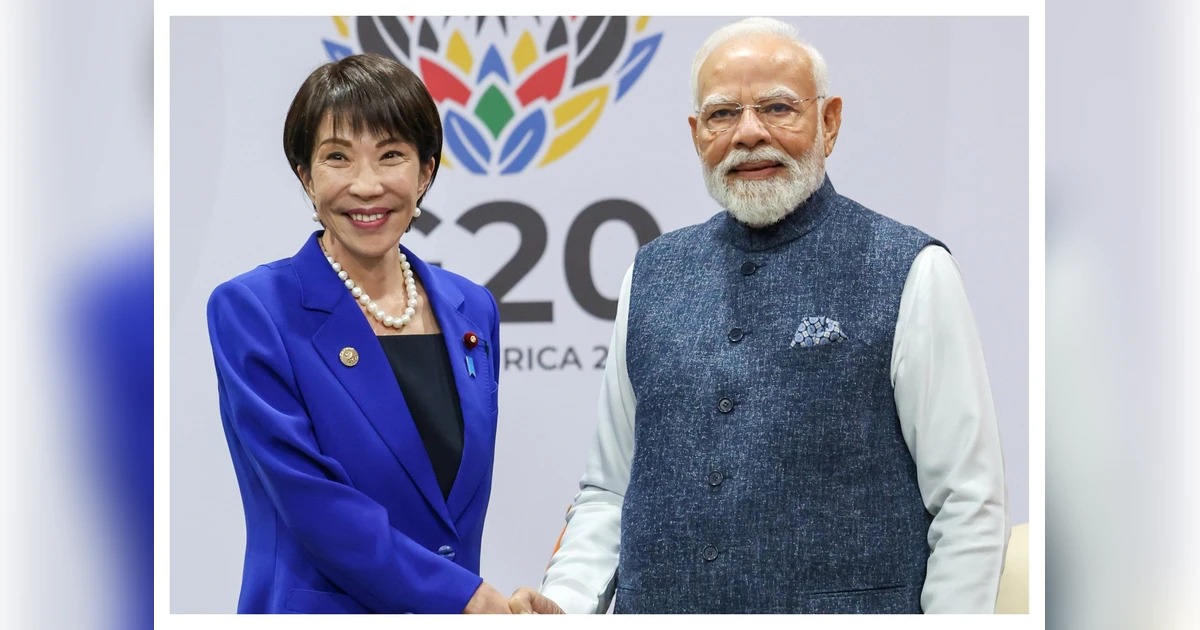
A landmark FICCI-SAM report released today, March 14, 2026, charts a new era of India-Japan economic partnership built on Chuken-to-Chuken collaboration. Moving well beyond traditional supplier dynamics, these mid-sized enterprise alliances across semiconductors, EVs, pharmaceuticals, and clean energy could redefine the Indo-Pacific's industrial backbone.
India and Japan's economic relationship is entering its most consequential chapter yet, and the architects are not the conglomerates — they are the mid-sized manufacturers. According to a new report by FICCI jointly with Shardul Amarchand Mangaldas & Co, the next phase of India-Japan economic cooperation will increasingly be driven by collaboration between Japanese mid-sized enterprises, known as Chuken, and India's dynamic mid-sized manufacturing firms — moving the relationship beyond traditional supplier models toward co-creation. Released today in New Delhi, the report could not be more timely in a year defined by supply chain realignment and strategic industrial diversification.
The Chuken-To-Chuken Concept Explained
The term Chuken — meaning "backbone enterprise" in Japanese — refers to Japan's formidable ecosystem of mid-sized industrial firms that are globally dominant in niche manufacturing categories. The report's central thesis is that India's equivalent mid-market manufacturers are their natural counterparts.
Since many Indian mid-sized companies already serve as tier-1 and tier-2 suppliers to global manufacturers, supported by strong engineering capabilities, international certifications, and growing R&D capacity, their operational depth and readiness for expansion make them natural partners for Japanese firms seeking to diversify supply chains and strengthen manufacturing collaboration in the Indo-Pacific.
The Sectors Where The Opportunity Is Greatest
The FICCI-SAM report maps the partnership opportunity across eight high-potential sectors with considerable precision.
In semiconductors and electronics, India's fast-growing market and strong policy support combined with Japan's upstream technology strengths enable joint development of OSAT and ATMP facilities, power semiconductors, and deeper supply chain integration.
In pharmaceuticals and healthcare, India's global leadership in generics and Japan's innovation-driven ecosystem create pathways to collaborate on APIs, vaccines, digital R&D, and regulated market manufacturing.
Japan's clean energy transition goals and India's rapid renewable expansion — including 262.7 GW of renewable energy capacity — create new opportunities across hydrogen, ammonia, and grid-scale storage.
Recent defence export policy reforms in Japan and India's industrial corridors open pathways for joint production in electronics, sensors, maritime systems, and co-development of next-generation platforms.
The Strategic Context Behind The Report
This report arrives at a moment of deep bilateral momentum. Japan's Foreign Minister's visit to India for the 18th India-Japan Strategic Dialogue in January 2026 marked a decisive shift in bilateral relations towards deeper and more pragmatic alignment centred on economic security, building on the India-Japan Joint Vision launched during Prime Minister Modi's visit to Japan in August 2025.
The ministers greenlit the Japan-India Private-Sector Dialogue on Economic Security for launch in the first quarter of 2026, zeroing in on five priority domains: semiconductors, critical minerals, ICT, clean energy, and pharmaceuticals.
Partnership Potential: What The Numbers Reveal
Japan is today India's fifth-largest investor, with cumulative FDI reaching USD 45.69 billion — a figure the FICCI-SAM report expects to grow substantially as Chuken-to-Chuken partnerships formalise
India's EV penetration and domestic supplier ecosystem create strong complementarities with Japan's advanced automotive technologies, EV components, and battery systems
India's expanding shipbuilding capacity complements Japan's advanced ship design capabilities — with collaboration opportunities in commercial vessels, green shipping, and maritime supply chains
Japan's railway and aviation expertise spanning signalling, safety systems, high-speed mobility, and MRO can significantly accelerate India's infrastructure modernisation agenda
MSME cooperation is described as the potential cornerstone of the future of India-Japan partnership, with Indian MSMEs identified as having significant learning opportunities from Japanese counterparts
Japanese companies have already invested 3.8 trillion yen in India in the first two years against a five-year target of 5 trillion yen — pace of investment is ahead of schedule
A Partnership Built For The Indo-Pacific Moment
By aligning their economic security priorities, India and Japan are laying the groundwork for a deeper and more resilient relationship that strengthens bilateral ties while contributing to a stable Indo-Pacific order. The FICCI-SAM report is not merely an academic survey of opportunities — it is a practical roadmap for how two of Asia's most consequential economies can grow together by empowering the businesses that form the backbone of each nation's industrial strength.
Sources: ANI / FICCI-SAM Report, New Kerala, TagTV, 9DashLine, FICCI Press Releases, NewKerala Strategic Dialogue Coverage, Webindia123