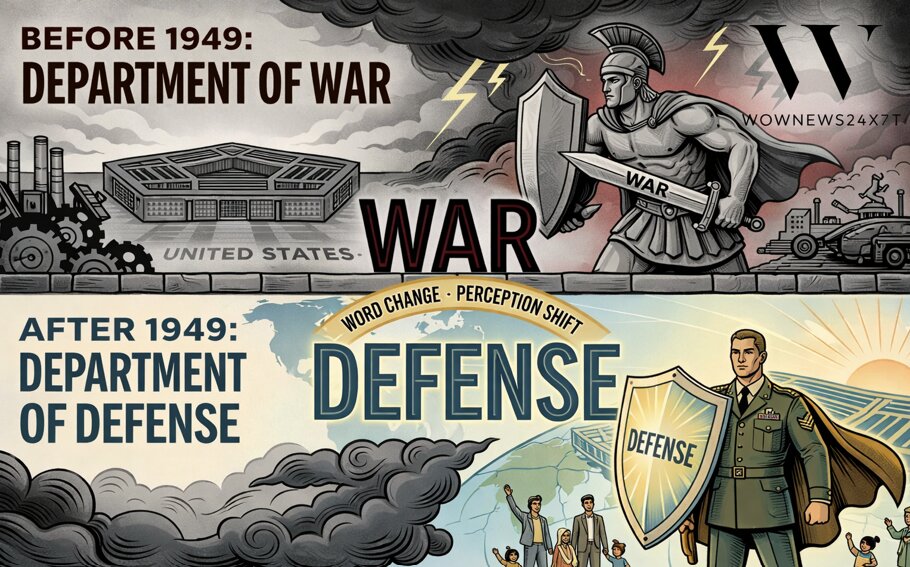




A single word can change how the world sees power. The shift from ‘War’ to ‘Defense’ was more than a rename, it redefined perception, intent, and global acceptance. This example reveals the immense power words hold in shaping policies, narratives, and outcomes, not just for nations, but in everyday life.
Words are not just tools of communication, they are forces that shape perception, influence decisions, and define reality. The shift from ‘Department of War’ to ‘Department of Defense’ reflects how powerful words can reframe intent. In a changing geopolitical landscape, words continue to shape nations and narratives.
In global governance, words are carefully chosen, often carrying intentions far beyond their literal meaning. One historical shift in the United States stands as a compelling example of how a single word can influence how an entire nation, and the world, perceives power.
A Story Of Two Words: War And Defense
For over 150 years, the United States operated under the Department of War, a name that was direct, unfiltered, and reflective of its purpose. It managed defining conflicts such as the Civil War and both World Wars, where the word “war” conveyed strength, action, and confrontation.
Then came a turning point.
In 1949, in the aftermath of global devastation and the onset of the Cold War, the same institution was renamed the Department of Defense. Nothing else changed overnight, the military remained strong, the strategies continued, but the word changed.
And with that, perception changed.
Suddenly, actions were no longer seen purely as aggression or expansion, but as protection, responsibility, and global stability. The same power, the same decisions, but a different word created a different reality in the minds of people.
The Invisible Power Of Words
This transformation highlights a deeper truth, words are not passive. They carry energy, intent, and influence. Governments, leaders, and institutions understand this deeply, every term is chosen to align with a larger narrative.
A single word can calm a nation or provoke one. It can justify action or question it. It can build trust or create resistance.
In today’s world of instant communication, this power has only amplified. Words travel faster than actions and often shape how those actions are received.
From Nations To Individuals
While this example comes from global politics, its relevance is universal. Just as nations shape perception through words, individuals do the same in their daily lives.
The words we choose, whether in leadership, relationships, or self-talk, carry the same potential to influence outcomes. A shift in wording can transform conflict into understanding, pressure into possibility, and fear into confidence.
Key Highlights
-
The U.S. Department of War was established in 1789 and led major historical conflicts
-
In 1949, it was renamed the Department of Defense following structural reforms
-
The change demonstrated how a single word can shift global perception
-
Words play a strategic role in shaping political narratives and public opinion
-
The power of words extends beyond governance into everyday communication
-
Conscious word choice can influence outcomes, relationships, and decisions
Sources: Authored Insight By Mahesh Toshniwal, U.S. National Archives, Office of the Historian, Defense Department historical records