





Image Source: WOWNEWS24X7
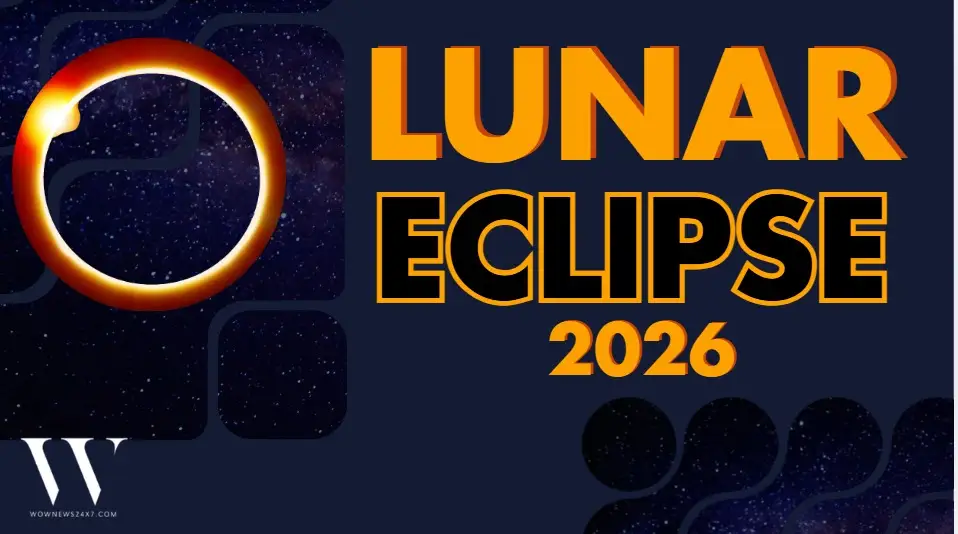
On March 3, 2026, India will witness the year’s first total lunar eclipse, popularly known as Chandra Grahan. The eclipse begins at 3:20 PM IST, peaks between 4:34 PM and 5:33 PM IST, and ends by 6:48 PM IST. Cities like Delhi, Mumbai, Bengaluru, Patna, and Kolkata will see partial phases after moonrise.
Show more
A Celestial Spectacle Awaits
The much-anticipated total lunar eclipse of 2026 is set to unfold on March 3, coinciding with Holi festivities. Known as the Blood Moon due to its reddish glow, this eclipse marks the first total lunar eclipse of the year and promises a breathtaking sight for skywatchers across India.
Key Highlights of the Event
-
Timings in India: The eclipse begins at 3:20 PM IST, reaches totality between 4:34 PM and 5:33 PM IST, and concludes at 6:48 PM IST.
-
Visibility: Due to late moonrise in most regions, Indian viewers will primarily witness the final phases of the eclipse. Northeastern states are expected to have the clearest view.
-
Cities Covered: Major metros including Delhi, Mumbai, Bengaluru, Patna, and Kolkata will see partial visibility after moonrise.
-
Blood Moon Effect: As Earth’s shadow covers the Moon, sunlight filtered through the atmosphere will give it a deep red hue, creating the dramatic Blood Moon.
-
Global Context: While India sees partial visibility, regions in Europe, Africa, and the Americas will witness the eclipse in full glory.
How to Watch Chandra Grahan Safely
-
No Equipment Needed: The lunar eclipse can be viewed with the naked eye, unlike solar eclipses which require protective gear.
-
Best Viewing Spots: Open areas with minimal light pollution like rooftops, terraces, or parks, offer the clearest view.
-
Timing Matters: Since moonrise occurs after peak totality in most Indian cities, plan to watch between 5:30 PM and 6:45 PM IST for the best glimpse.
-
Cultural Significance: In India, lunar eclipses are often accompanied by rituals and traditions. However, astronomers emphasize enjoying the event as a scientific and visual spectacle.
Why This Eclipse Matters
-
Astronomical Importance: It’s the first total lunar eclipse of 2026, making it a highlight for astronomy enthusiasts.
-
Public Engagement: Coinciding with Holi, the event is expected to draw large public interest, blending science with cultural celebration.
-
Educational Opportunity: Schools and astronomy clubs are encouraging students to observe the eclipse, fostering curiosity about celestial phenomena.
Sources: Times Now, India Today, The Indian Express, Jagran Josh
Stay Ahead – Explore Now!
Lunar Eclipse 2026: Chandra Grahan Timings for Delhi, Mumbai, Bengaluru, Kolkata, Patna and More

Advertisement
STORIES YOU MAY LIKE
Updated: February 28, 2026 19:14
Image Source: Linkedin
Updated: February 27, 2026 18:54
Image Source: Entrackr
Updated: February 26, 2026 18:44

Advertisement