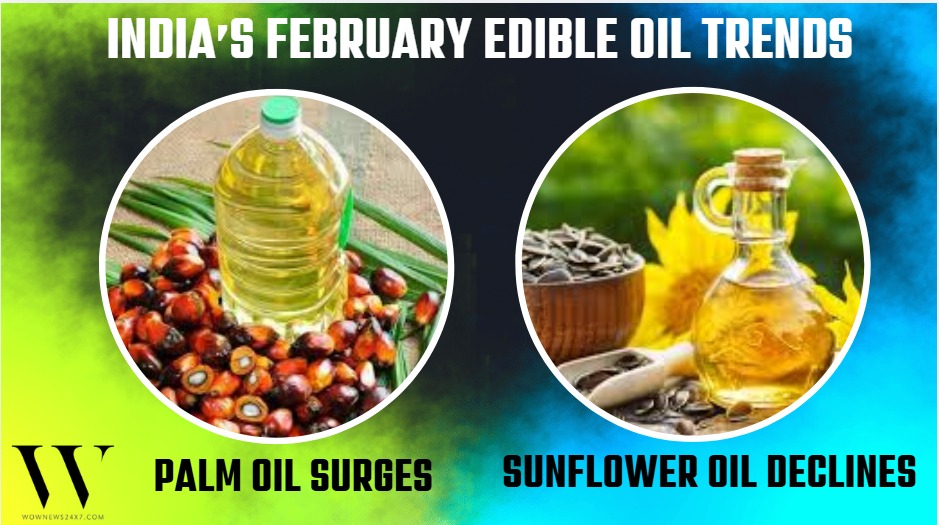





India’s edible oil imports fell 1.4% month-on-month to 1.29 million metric tons in February 2026, dealers reported. Sunflower oil imports plunged 45.3%, while soyoil rose 8.7%. Palm oil imports surged 10.1% to 844,000 tons, the highest in six months, reflecting shifting demand patterns and global supply dynamics.
India’s edible oil market witnessed divergent import trends in February 2026, underscoring changing consumption patterns and supply chain adjustments. According to dealers, total edible oil imports stood at 1.29 million metric tons, down 1.4% month-on-month, but individual categories showed sharp contrasts.
Key Highlights
-
Overall Imports: Edible oil imports dipped slightly to 1.29 million tons, reflecting cautious buying.
-
Sunflower Oil: Imports dropped 45.3% to 146,000 tons, driven by higher global prices and tighter supply.
-
Soyoil: Imports rose 8.7% to 303,000 tons, supported by competitive pricing and steady demand from food processors.
-
Palm Oil: Imports surged 10.1% to 844,000 tons, marking the highest level in six months, as refiners capitalized on favorable pricing and availability.
-
Market Context: Analysts note that palm oil’s rebound highlights its dominance in India’s edible oil basket, while sunflower oil’s decline reflects volatility in Black Sea supply chains.
Why It Matters
India, the world’s largest edible oil importer, remains highly sensitive to global price shifts and geopolitical supply factors. These February figures highlight the resilience of palm oil demand and the vulnerability of sunflower oil imports, shaping future procurement strategies for refiners and policymakers.
Sources: Reuters, Business Standard, Economic Times