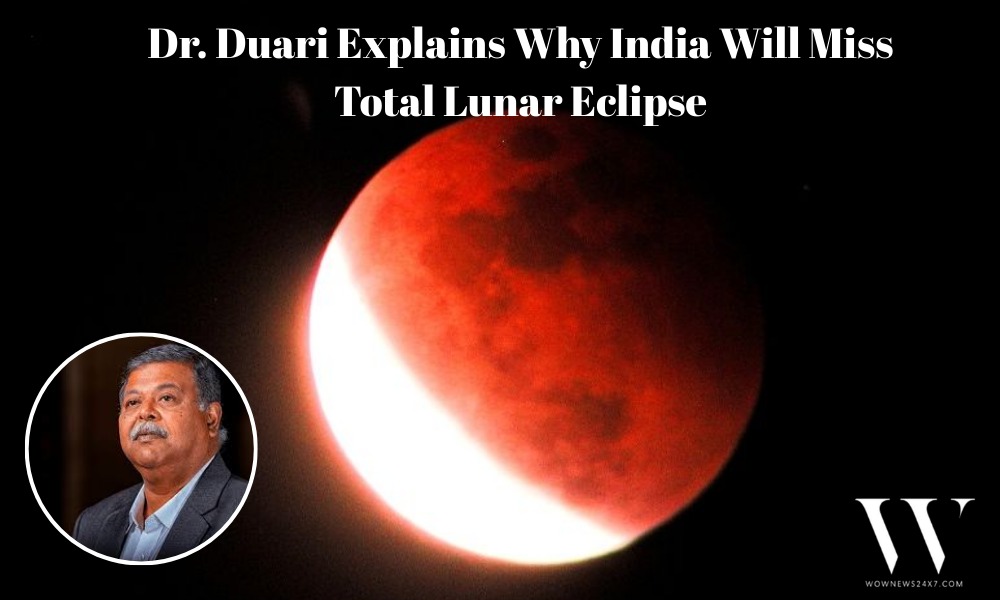





On March 3, 2026, India will witness only a partial lunar eclipse, as the Moon will be below the horizon during totality. Former Birla Planetarium Director Dr. Debinrosad Duari confirmed that while a total eclipse occurs globally, Indian observers will see only the partial phase, beginning in the afternoon.
India’s skywatchers are set for a celestial spectacle today, but with limited visibility. According to Dr. Debinrosad Duari, former Director (Research and Academic) at MP Birla Planetarium, the March 3, 2026 lunar eclipse will be total globally, yet only a partial phase will be visible from India.
Key Highlights
-
Partial Visibility in India: The Moon will be below the horizon during totality, restricting Indian observers to the partial eclipse.
-
Timings: The partial eclipse begins at 3:20 PM IST, with totality occurring between 4:34 PM and 5:32 PM IST, though not visible in India. The ending phase will coincide with moonrise in most regions.
-
Global View: The full eclipse will be prominently visible across North America, Australia, and the Pacific.
-
Cultural Context: Occurring on Purnima (full moon), the event coincides with Holi festivities. Experts clarified that the eclipse will have no impact on celebrations.
-
Scientific Significance: A lunar eclipse occurs when the Earth blocks sunlight from reaching the Moon, often giving it a reddish hue (Blood Moon) in regions where totality is visible.
Why It Matters
This event highlights India’s unique vantage point in global astronomy—while the full eclipse is missed, the partial phase offers a chance for enthusiasts to witness a rare alignment. It also underscores the importance of scientific communication in dispelling myths around eclipses and cultural practices.
Sources: WebIndia123, The Indian Express, NewKerala, Asianet Newsable