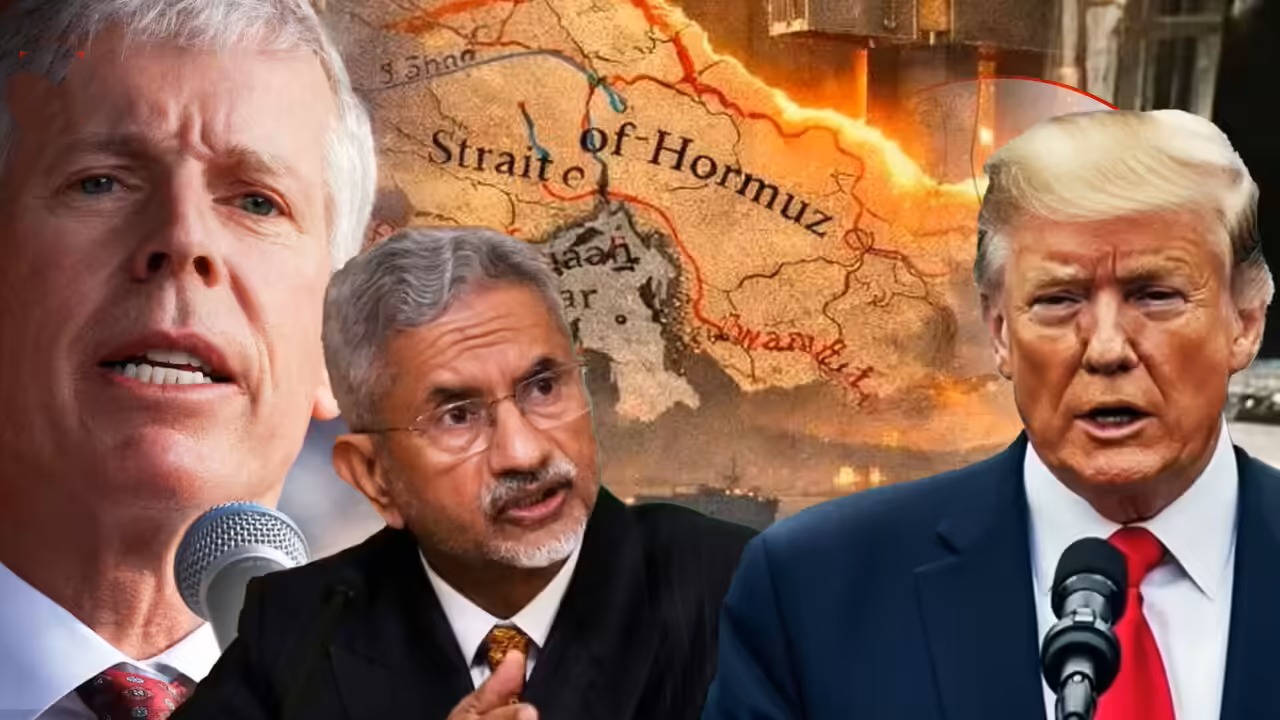




Global oil markets are rattled as Iran tightens its grip on the Strait of Hormuz, blocking nearly 20% of global oil and LNG shipments. U.S. President Donald Trump has urged allies, including India, to join a military coalition to secure the corridor, but New Delhi remains cautious.
India’s Ministry of External Affairs confirmed it has not yet engaged in bilateral talks with Washington over the Hormuz crisis. While the U.S. Energy Secretary hinted at Trump “reaching out” to India, New Delhi is balancing strategic energy needs with regional diplomacy.
Escalating Tensions In Hormuz
The Strait of Hormuz, a vital chokepoint for global energy flows, has been effectively closed to vessels linked to the U.S. and its allies since strikes on Iran began two weeks ago. Trump’s coalition call includes nations like Japan, South Korea, France, and the UK, but commitments remain uncertain.
India’s Strategic Dilemma
India, heavily reliant on Gulf oil imports, faces rising crude prices and shipping risks. While joining the coalition could secure energy supplies, it risks straining ties with Iran, a long-standing partner. Analysts suggest India may prefer diplomatic channels over military involvement.
Key Highlights
-
Iran blocks Strait of Hormuz, disrupting 20% of global oil trade
-
Trump urges allies, including India, to join naval coalition
-
India says no bilateral talks yet with U.S.
-
Rising crude prices threaten India’s energy security
-
Coalition appeal sees limited global commitments so far
-
India weighs diplomacy versus military engagement
Sources: Times Now, Hindustan Times, The Logical Indian