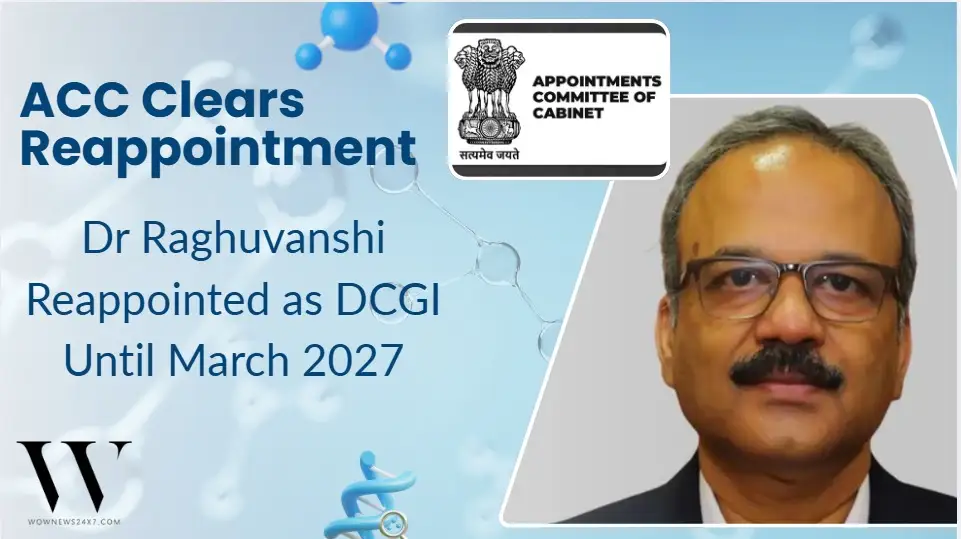







The Appointments Committee of the Cabinet (ACC) has approved the reappointment of Dr Rajeev Singh Raghuvanshi as Drugs Controller (India) for one year starting March 1, 2026. Heading the Central Drugs Standard Control Organisation (CDSCO), he will continue overseeing drug quality, approvals, and regulatory reforms amid growing scrutiny of India’s pharmaceutical sector.
Leadership Continuity in India’s Drug Regulation
India’s pharmaceutical industry, one of the largest globally, will continue under the leadership of Dr Rajeev Singh Raghuvanshi, as the ACC has cleared his reappointment as Drugs Controller General of India (DCGI). His tenure, extended on a contract basis for one year, ensures stability at a time when regulatory reforms are critical.
Key Highlights of the Announcement
-
Tenure Extension: Dr Raghuvanshi will serve as DCGI until March 2027, following the ACC’s approval.
-
Proposal Origin: The reappointment was recommended by the Department of Health and Family Welfare.
-
Role & Responsibilities: As head of the CDSCO, he oversees drug approvals, clinical trials, and quality standards for medicines and medical devices in India.
-
Track Record: During his tenure, he has led Good Manufacturing Practice (GMP) reforms, strengthened oversight of substandard drug units, and pushed for stricter compliance.
-
Legal & Policy Context: His extension comes amid debates over recruitment rules, signaling the government’s preference for leadership continuity during ongoing reforms.
Why This Matters
-
Pharmaceutical Oversight: India is a global supplier of generic medicines; regulatory leadership directly impacts international trust and domestic safety.
-
Reform Momentum: Continuity under Dr Raghuvanshi ensures reforms in drug quality monitoring, compliance, and transparency remain on track.
-
Global Confidence: His reappointment reinforces India’s commitment to maintaining high standards in drug regulation, crucial for exports and public health.
-
Policy Implications: The move highlights the government’s balancing act between institutional reforms and leadership stability in a sensitive sector.
Sources: The Economic Times, MoneyControl, DrugsControl Media Services