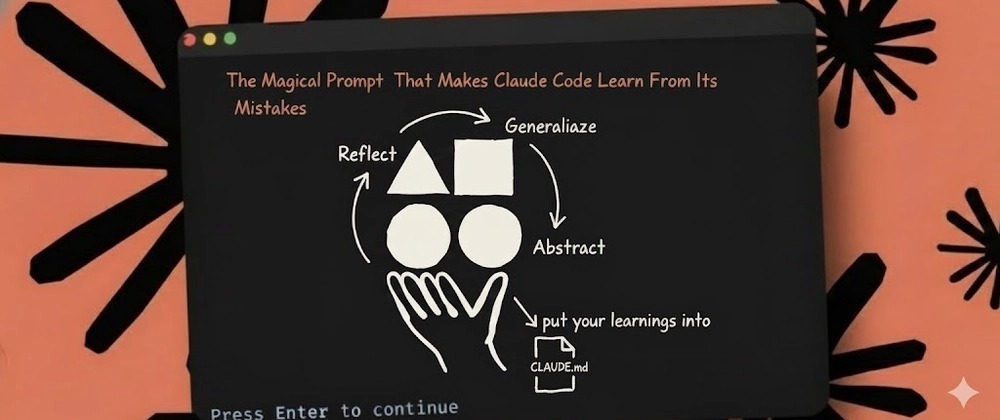





Claude Code, Anthropic’s agentic coding environment, is evolving with continual learning techniques that allow it to refine performance by analyzing past errors. By integrating reflection, iterative prompt design, and atomic task breakdowns, developers can help Claude Code adapt, reduce mistakes, and deliver more reliable autonomous coding outcomes.
Claude Code is designed to autonomously read files, run commands, and implement solutions. However, like any AI system, it can make errors. Researchers and developers are now focusing on teaching Claude Code how to learn from its mistakes, enabling it to become more intuitive and effective over time.
Continual Learning Approach
Claude Code’s improvement hinges on continual learning, a process where the system reflects on past tasks, identifies what worked, and adjusts strategies. This mirrors human learning, where repeated practice builds intuition and reduces errors.
Prompt Engineering Best Practices
Developers are encouraged to use atomic task design-breaking complex problems into smaller, manageable steps. This helps Claude Code avoid common pitfalls, such as vague instructions or outdated prompt patterns, ensuring more consistent results.
Strategic Importance
By learning from mistakes, Claude Code can deliver scalable, autonomous coding solutions across diverse environments. This evolution strengthens its role as a reliable partner for developers, reducing frustration and enhancing productivity in complex projects.
Future Outlook
As Claude Code integrates self-improvement mechanisms, it is expected to become more adaptive, intuitive, and efficient. This advancement could redefine how developers interact with AI coding agents, making autonomous programming more mainstream.
Key Highlights
-
Claude Code evolving with continual learning
-
Focus on reflection and iterative improvement
-
Atomic task design reduces prompt-related errors
-
Enhances reliability and developer productivity
-
Positions Claude Code as a scalable coding partner
Sources: Towards Data Science, Claude Code Docs, Ralphable Blog