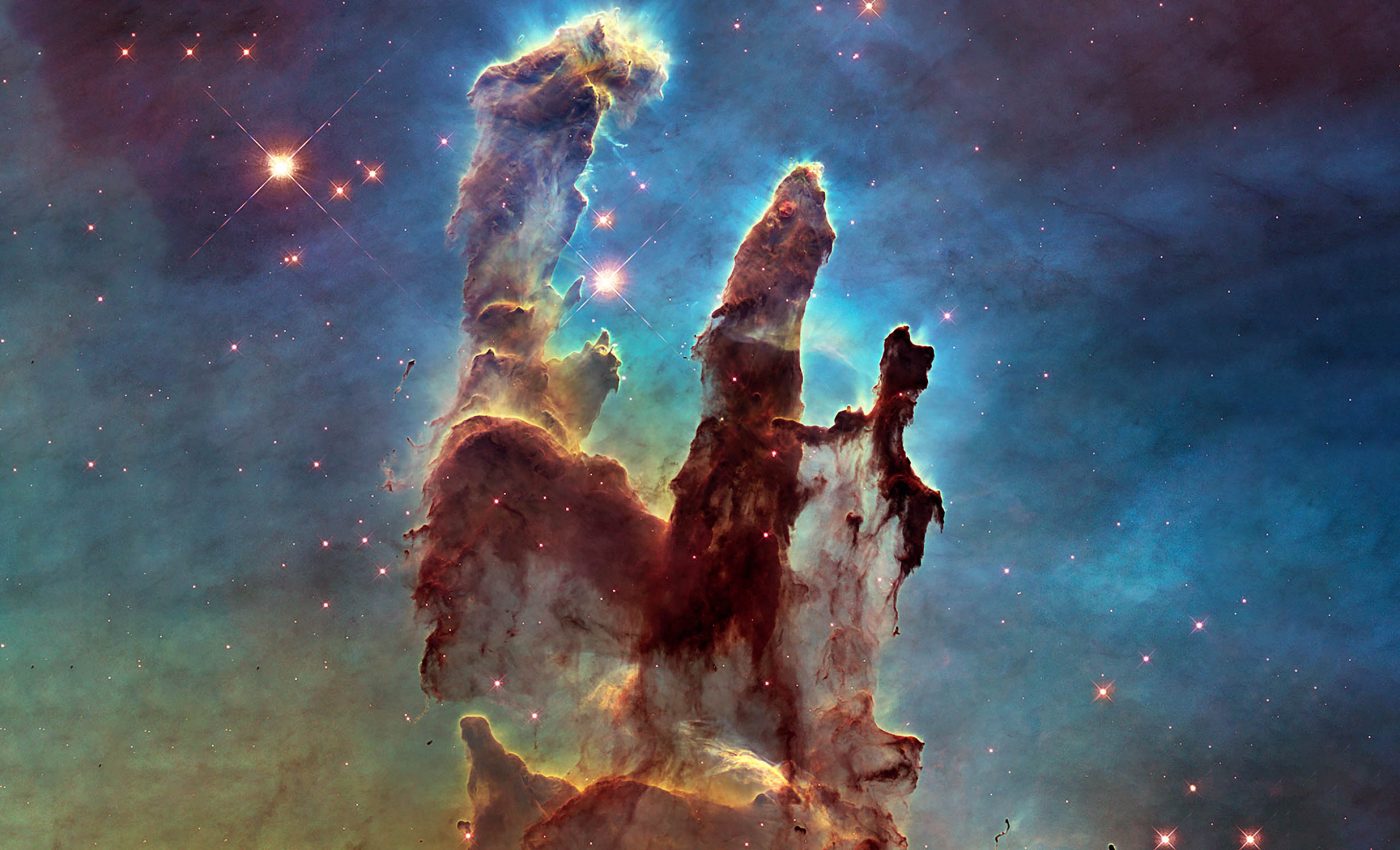






The Hubble Space Telescope celebrates 36 years in orbit, continuing to transform astronomy with breathtaking images and groundbreaking discoveries. Since its 1990 launch, Hubble has revealed the age of the universe, the existence of dark energy, and stunning views of galaxies, nebulae, and exoplanets, inspiring generations of scientists.
Launched on April 24, 1990, aboard the Space Shuttle Discovery, Hubble overcame early technical challenges to become one of the most celebrated observatories in history. Its legacy continues to shape our understanding of the cosmos and complements newer telescopes like James Webb.
Fixing Blurry Beginnings
Hubble’s initial flaw-a misaligned mirror-was corrected in 1993 during a servicing mission. This repair transformed Hubble into a precision instrument, enabling it to capture some of the most iconic images in astronomy.
Scientific Breakthroughs
Hubble has measured the expansion rate of the universe, confirmed dark energy, and provided detailed observations of star formation, planetary atmospheres, and distant galaxies. Its data has been central to thousands of scientific papers and discoveries.
Cultural And Scientific Legacy
Beyond science, Hubble’s images have inspired public fascination with space. Its success paved the way for next-generation telescopes, ensuring its role as a cornerstone of modern astronomy.
Key Highlights
-
Launched April 24, 1990, aboard Discovery
-
Mirror flaw corrected in 1993 servicing mission
-
Revealed universe’s age and dark energy
-
Captured iconic images of galaxies and nebulae
-
Inspired future telescopes like James Webb
Sources: NASA Science, Earth.com, MIT Technology Review