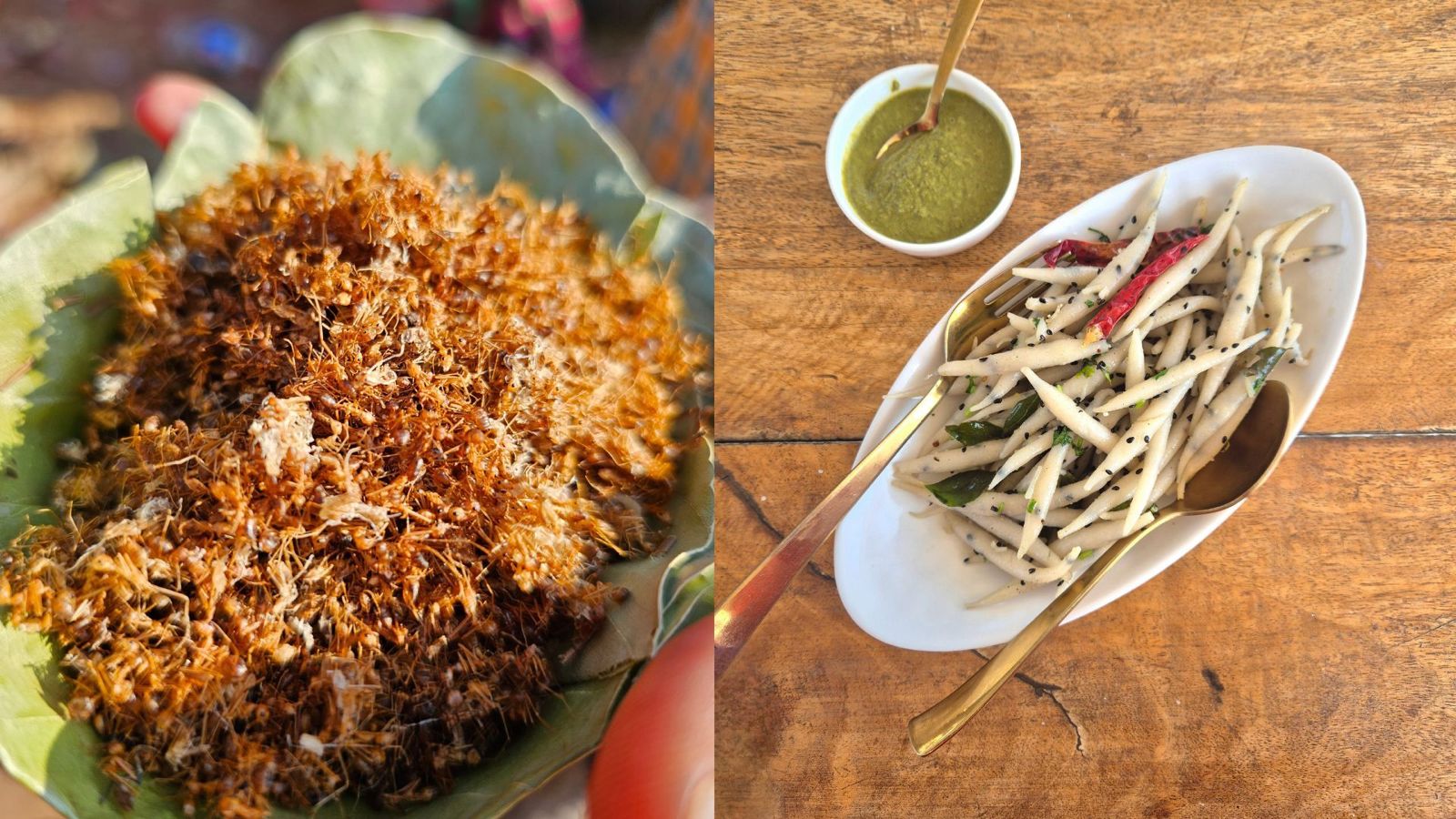






Bastar’s culinary traditions are gaining national attention, with tribal communities like the Bhatras, Muriyas, and Gonds showcasing age-old recipes rooted in forest produce, fermentation, and roasting techniques. Dishes such as chaprah chutney (red ant chutney), fara (rice dumplings), and freshwater fish preparations highlight the region’s unique food culture.
On March 28, 2026, Mint and MSN featured Bastar’s tribal cuisine, spotlighting how traditional recipes are being served in heritage cafés and homes across Jagdalpur and nearby villages. The culinary journey emphasizes sustainability, nutrition, and cultural heritage, making Bastar a rising destination for food tourism.
Culinary Heritage Of Bastar
Tribal Influence: Recipes shaped by Gonds, Muriyas, Bhatras, and other communities.
Staple Ingredients: Rice, forest herbs, tamarind, mahua flowers, and freshwater fish.
Traditional Techniques: Fermentation, roasting, and natural preservation methods.
Signature Dish: Chaprah chutney made from red ants, known for its tangy flavor.
Emerging Food Tourism
Heritage cafés in Jagdalpur serve dishes like fara and chaprah.
Local markets such as Mardum showcase tribal delicacies.
Culinary experiences include home-cooked meals in villages like Kurandi.
Cultural Significance
Food reflects Bastar’s deep connection with forests and sustainability.
Tribal recipes emphasize nutrition and simplicity.
Culinary practices are being documented to preserve heritage.
Key Highlights
• Bastar cuisine rooted in tribal traditions and forest produce
• Signature dishes include chaprah chutney, fara, and rice-based meals
• Heritage cafés and village homes offer authentic culinary experiences
• Food tourism rising in Jagdalpur and surrounding villages
• Culinary heritage reflects sustainability and cultural identity
Sources: TravelSetu, MSN, Mint