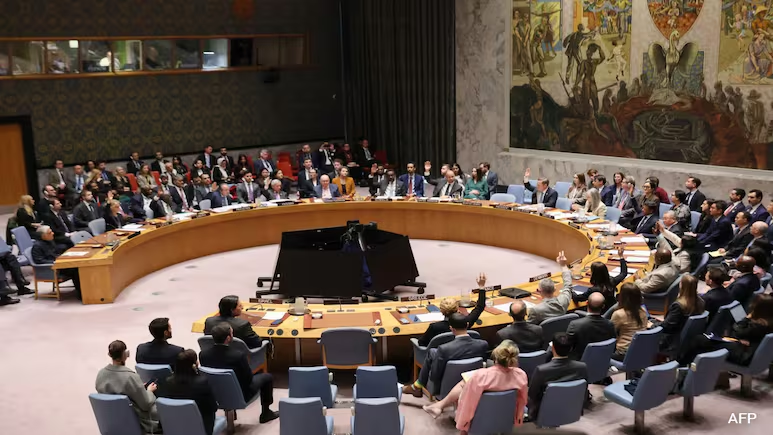







The UN Security Council has called on Iran to immediately stop its attacks on Gulf nations, warning that the escalating conflict poses a grave threat to global peace and security. The resolution condemns missile and drone strikes, urging de-escalation to protect energy markets and prevent wider regional instability.
Introductory Brief
In an urgent resolution passed this week, the UN Security Council demanded Iran halt military actions against Gulf states. The council emphasized that continued aggression risks destabilizing the Middle East, disrupting global trade, and undermining international peace.
Resolution Details
The resolution, adopted with broad support, condemned Iran’s recent missile and drone strikes targeting Gulf nations. It stressed that such actions violate international law and threaten maritime security in one of the world’s most critical energy corridors. While two members abstained, the majority backed immediate de-escalation measures.
Regional And Global Impact
Iran’s attacks have already disrupted oil infrastructure and shipping routes, raising concerns about energy security worldwide. Gulf nations have urged restraint and called for international mediation. Analysts warn that prolonged conflict could destabilize the region further, affecting global trade, energy prices, and diplomatic relations across Asia, Europe, and the US.
Key Highlights
* UN Security Council resolution demands Iran halt Gulf attacks
* Missile and drone strikes condemned as violations of international law
* Resolution passed with majority support, two abstentions
* Energy markets and maritime security under threat
* Calls for immediate ceasefire to prevent wider instability
Sources: Al Jazeera, Reuters, The Hindu, Bloomberg