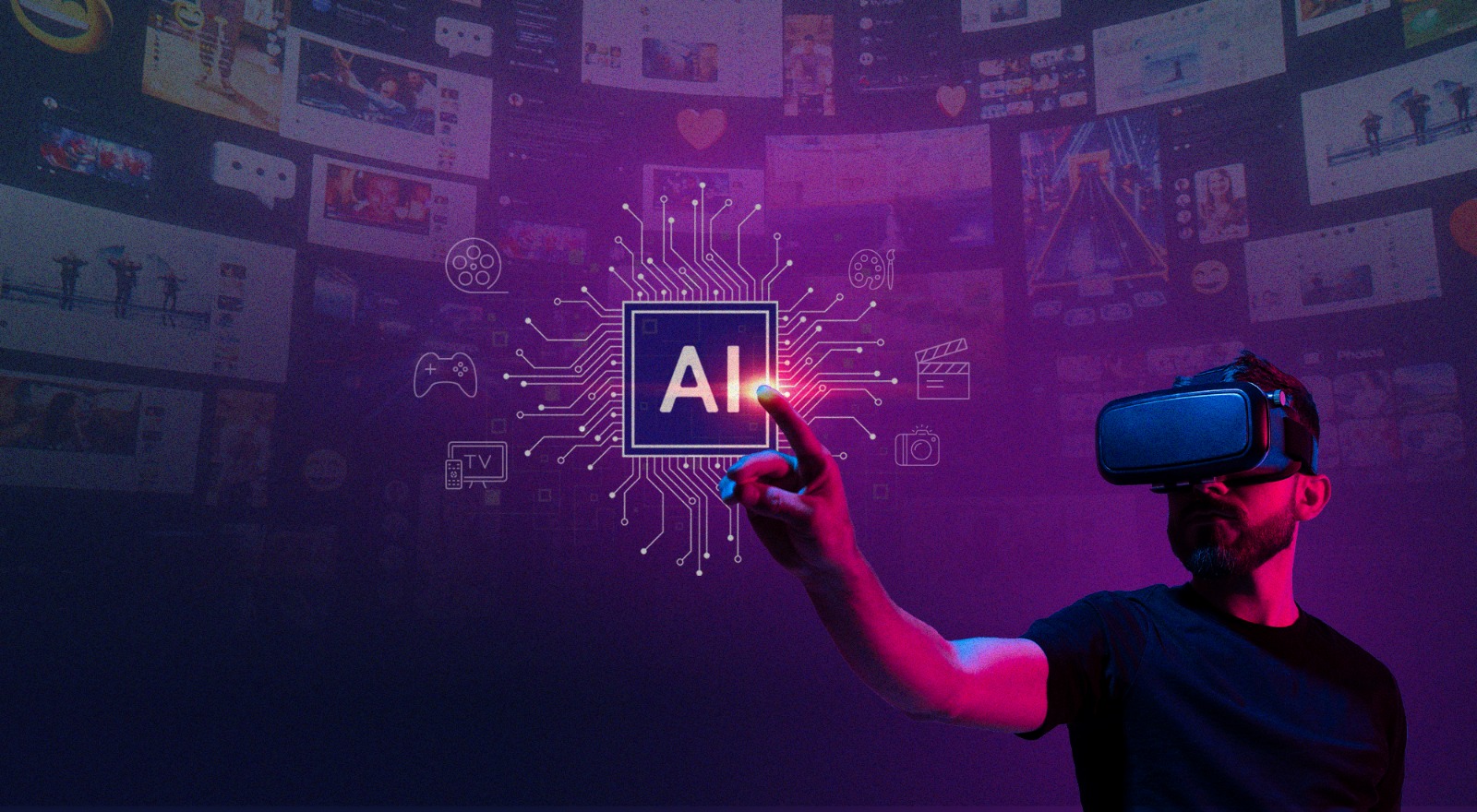
Artificial intelligence is no longer a supporting character in the media and entertainment story — it has taken the lead role. From AI-generated video entering primetime television to hyper-personalised streaming experiences and synthetic celebrities, 2026 marks the year the industry stopped experimenting with AI and started being defined by it.
The creative industries have crossed a threshold that will be difficult to reverse. Generative AI is lowering barriers to content creation across the media and entertainment industry, with free or low-cost tools now capable of converting text prompts to video, automating the production of short-form content, and developing virtual actors that are arguably indistinguishable from the real thing. What was once the exclusive domain of major studios with multimillion-dollar budgets has become democratised, accessible, and radically fast.
The Generative Video Revolution Hits Primetime
The most visible AI shift in 2026 is the leap from experimental to essential in generative video. In 2026, generative video has moved from supporting act to leading role, with experiments using it to create filler scenes and environmental effects breaking into primetime, as seen in Netflix's El Eternauta. What began as a cost-cutting tool in post-production is now influencing the entire production pipeline — from how scripts are storyboarded to how final cuts are edited.
AI is already being used to dub and localise content and to accelerate footage clipping and video library filtering, while leaders project that once AI tools reach professional-grade resolution and consistency, post schedules could shorten significantly and AI could start to blend post-production into the pre-production process.
Personalisation As A Competitive Weapon
Audience attention has become the industry's most contested currency, and AI is the sharpest tool in the fight for it. Platforms are dynamically altering episode lengths to fit individual time constraints, generating recaps and catch-up edits intelligently to counter attention fatigue, and developing modular storytelling methods — with Amazon offering X-Ray Recaps while Disney+ and Netflix explore AI-generated highlight and summary versions of episodes.
Short-form vertical video remains the industry's fastest-growing format, with microdramas — scripted, serialised one-to-two-minute videos — now attracting tens of millions of viewers and developing into a viable creative and commercial category.
Where Machines Meet The Stage
The transformation extends well beyond screens. CES 2026 in Las Vegas featured more than 25 different panels and events related to the entertainment industry, with programming focused on the cinematic capabilities of AI, the impact on advertising, and the role of the creator economy — with leaders from Netflix, Disney, and Warner Bros. all participating in sessions exploring how AI is reshaping both the traditional studio side and the digital creator side of the industry.
As M&A activity heats up across media and entertainment, AI capabilities are now at the top of company acquisition wish lists, while platforms with disparate strategies are converging into one-stop shops for short-form, long-form, live, and creator content, with YouTube and Netflix leading that consolidation.
Signals From The Shift: What The Numbers Reveal
The media and entertainment landscape is growing even more crowded in 2026 as AI-generated content floods social feeds, platforms, and screens
AI has the potential to deliver single-digit productivity improvements in near-term production use cases, with significantly larger gains as AI-native workflows mature in animation and VFX
Synthetic celebrities and virtual influencers are identified among the seven key media trends set to redefine entertainment in 2026, alongside immersive sports broadcasting and generative game worlds
For 2026, AI's strategic focus has shifted from whether to adopt it to how to apply it responsibly, with media leaders designing operating models that protect trust while accelerating quality, speed, and scale
AI now suggests content based on viewer preferences with impressive accuracy, while VR places users inside the story — with gaming leading immersive entertainment adoption by 2026
Gaming, like most media and entertainment sub-sectors, is also undergoing its own AI revolution, with generative tools reshaping game design, NPC behaviour, and real-time world-building
The Human Question At The Heart Of It All
Companies that treat AI as an enabler to customise and orchestrate while keeping what audiences see and feel recognisably human — authentic faces, genuine stories, and shared cultural moments — will be the ones that build deeper trust and stronger brand value. In 2026, the most powerful creative force in media is artificial. The most irreplaceable one, however, remains stubbornly human.
Sources: Deloitte Insights, EY, McKinsey & Company, Bernard Marr/Forbes, EPAM, AlixPartners, PBS NewsHour, NextGen Tech Labs, All Things Insights