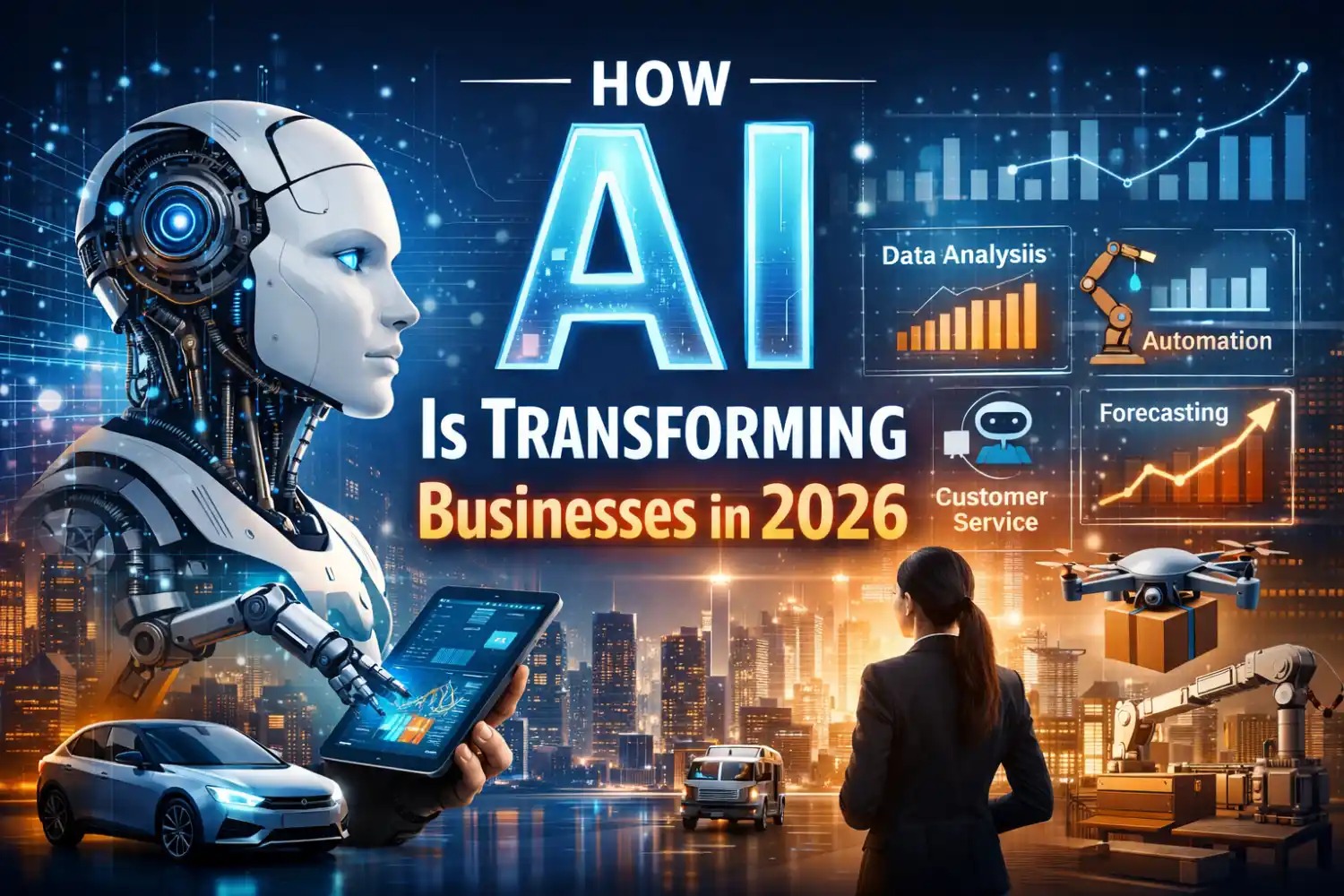
Artificial intelligence and automation are no longer emerging themes — they are the defining investment mega-trend of 2026. From hyperscaler capex surging past $650 billion to Gartner forecasting $2.52 trillion in global AI spend, the numbers signal a technological and economic inflection point unlike anything seen before.
Artificial intelligence and automation are no longer emerging themes — they are the defining investment mega-trend of 2026. From hyperscaler capex surging past $650 billion to Gartner forecasting $2.52 trillion in global AI spend, the numbers signal a technological and economic inflection point unlike anything seen before.
The world's largest technology companies have placed their bets, and every chip is on AI. Worldwide spending on AI is forecast to total $2.52 trillion in 2026, a 44% increase year-over-year, according to Gartner. What was once a speculative growth theme has now matured into the single most consequential force reshaping global capital allocation, enterprise strategy, and national economic policy simultaneously.
The Hyperscaler Arms Race
The scale of infrastructure commitment by Big Tech in 2026 is staggering by any historical measure. Meta told investors it would spend anywhere from $115 billion to $135 billion in 2026, while Microsoft's annual run rate for its 2026 fiscal year would put the company on pace for capital expenditures of $145 billion — with the vast majority of that spending directed toward AI chips, servers, and data centre infrastructure.
Wall Street's consensus estimate for hyperscaler capital spending in 2026 has now reached $527 billion, up from $465 billion at the start of the third-quarter earnings season, continuing a sustained trend of upward revisions. Goldman Sachs analysts note that supply bottlenecks and investor appetite — rather than balance sheet capacity — are the real constraints on how much further this spending could climb.
From Software To Steel: The Physical AI Moment
The investment wave is no longer limited to software and data centres. Breakthroughs in how robots can understand the real world, reason, and plan actions are fuelling the transition from research and development to commercial deployment across sectors including manufacturing, with Nvidia CEO Jensen Huang declaring that the "ChatGPT moment for physical AI is here."
About 58% of global business leaders surveyed by Deloitte indicated they are currently using physical AI to some extent in their operations for smart monitoring or production alongside humans. Humanoid robots, autonomous systems, and AI-powered cobots are rapidly moving from factory pilots to mainstream deployment.
What Is Driving Enterprise Adoption
Businesses across sectors such as healthcare, finance, and manufacturing are rapidly adopting AI systems to automate tasks, analyse large datasets, and improve efficiency, with AI chatbots, virtual assistants, and predictive analytics platforms now widely used by companies seeking to reduce operational costs.
According to Morgan Stanley Research's mapping of 3,600 stocks for AI exposure, 21% of S&P 500 companies mentioned at least one AI benefit — up from 10% in 2024 — with AI adopters seeing cash-flow margin expansion outpacing the global average by 2x.
Investment Signals Worth Watching In 2026
Global AI spend forecast for 2026: $2.52 trillion, a 44% year-over-year increase (Gartner)
Big Tech's combined AI capex guidance for 2026: $635–665 billion across Meta, Microsoft, Amazon, and Google
AI-optimised server spending alone is set to rise 49%, representing 17% of total AI spending in 2026
Morgan Stanley estimates $2.9 trillion in global data centre construction costs through 2028
The global robotics market is projected to exceed $200 billion by decade's end
Global AI investment reached $202.3 billion in 2025, representing 50% of all venture capital deployed worldwide
AI is expected to contribute approximately 25% of U.S. GDP growth in 2026
The Macro Stakes
AI is no longer a tech story — it is a macro variable influencing GDP, earnings, credit markets, and geopolitics at industrial scale, emerging as a strategic asset central to economic competitiveness, military capability, and energy projections. For investors, enterprises, and governments alike, 2026 is the year the AI investment supercycle stops being a forecast and starts being a fact.
Sources: Gartner, Goldman Sachs Research, Morgan Stanley Institute, Yahoo Finance, IBM Think, Manufacturing Dive, Foundation Capital, France Épargne Research