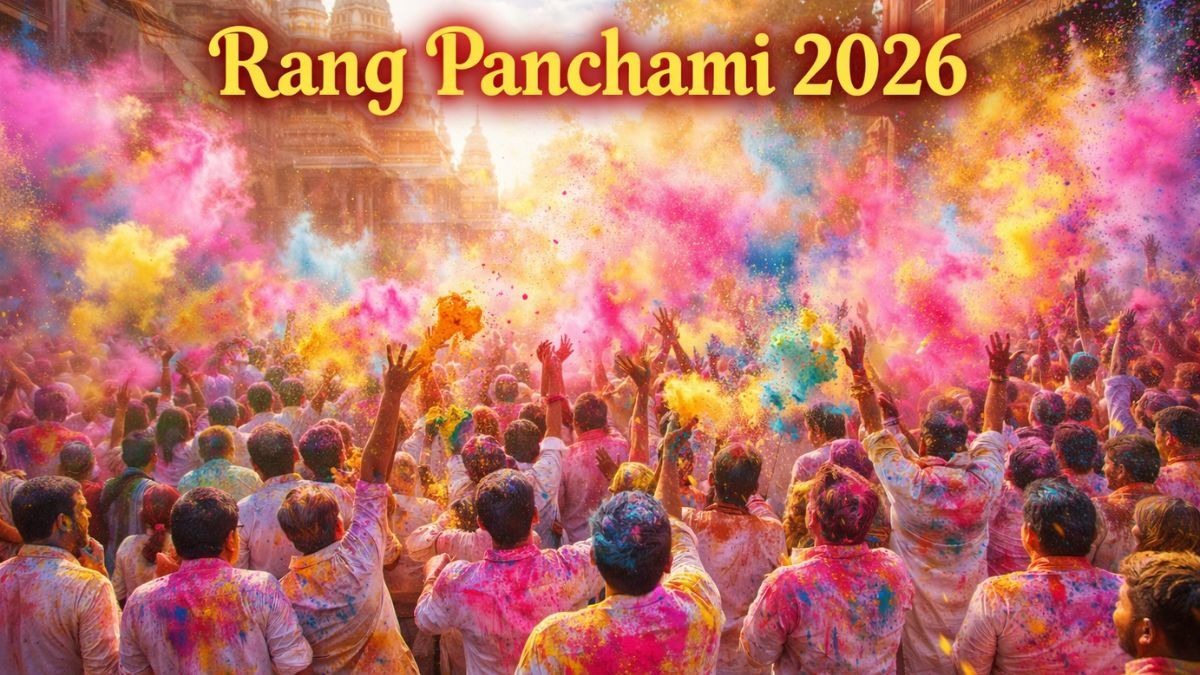




Ranga Panchami, observed five days after Holi, will be celebrated on March 7–8, 2026, across Maharashtra, Madhya Pradesh, Gujarat, and Rajasthan. The festival marks the arrival of spring and the triumph of good over evil, with vibrant community gatherings, music, and traditional rituals dedicated to Lord Krishna and Radha.
Ranga Panchami is a culturally significant Hindu festival that concludes the Holi celebrations. It is observed on the fifth day of the bright fortnight of the lunar month of Phalguna, symbolizing renewal, joy, and divine blessings. The festival is especially popular in Indore (Madhya Pradesh), Maharashtra, Gujarat, and Rajasthan, where communities come together to celebrate with colours and music.
Significance Of The Festival
Ranga Panchami is dedicated to Lord Krishna and Goddess Radha, embodying themes of love, devotion, and the victory of good over evil. It is believed that playing with colours on this day purifies the environment and strengthens social bonds.
Regional Celebrations
In Maharashtra and Madhya Pradesh, large processions and temple rituals are common, with Indore hosting some of the most vibrant festivities. Gujarat and Rajasthan also mark the day with cultural performances, folk music, and traditional games, reinforcing community spirit.
Key Highlights
- Celebrated five days after Holi, on March 7–8, 2026
- Dedicated to Lord Krishna and Goddess Radha
- Marks arrival of spring and triumph of good over evil
- Popular in Maharashtra, Madhya Pradesh, Gujarat, Rajasthan, and parts of Uttar Pradesh
- Celebrations include colours, music, dance, and community gatherings
Outlook For 2026
With growing interest in cultural tourism, Ranga Panchami 2026 is expected to attract visitors keen to experience India’s vibrant traditions. The festival’s emphasis on colour, joy, and togetherness makes it a fitting conclusion to Holi celebrations across western and central India.
Sources: Free Press Journal, Hindustan Times, Janta Se Rishta, MSN