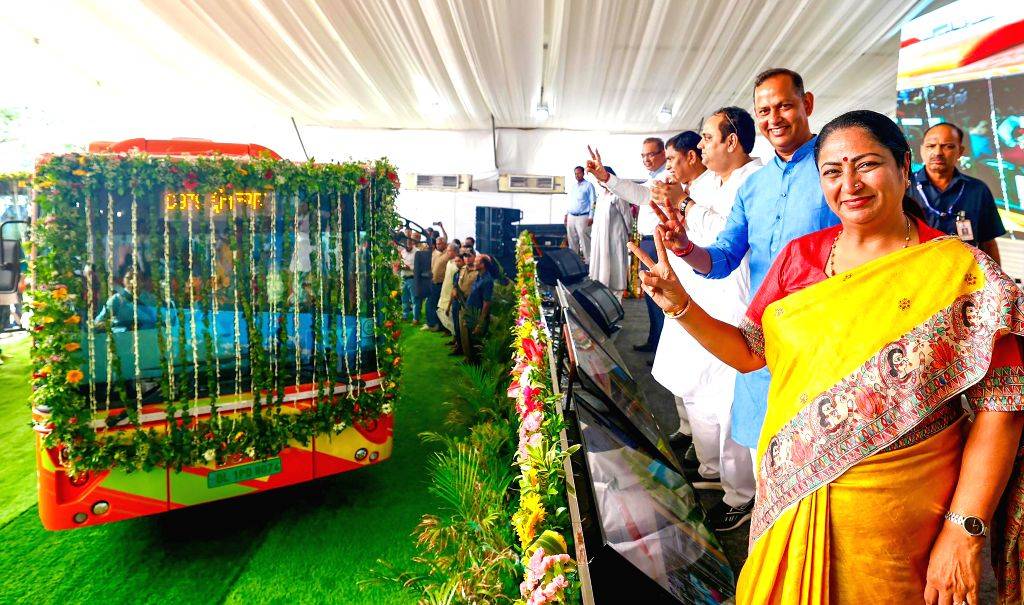






Delhi Chief Minister Rekha Gupta announced that the city’s entire public transport bus fleet will be converted into electric vehicles within three years. With 11,000 new e-buses planned and ₹30,000 crore allocated for infrastructure, the initiative aims to reduce pollution, modernize transport, and make Delhi greener and healthier.
In a landmark announcement during Republic Day celebrations at Chhatrasal Stadium, Delhi Chief Minister Rekha Gupta declared that the capital will transition its entire public transport bus fleet to electric within the next three years. This ambitious move positions Delhi as a leader in sustainable urban mobility.
Key Highlights
-
The Delhi government has doubled its capital expenditure, allocating ₹30,000 crore to accelerate infrastructure development.
-
Plans are underway to induct 11,000 new electric buses into the city’s fleet.
-
Charging stations and depots are being rapidly established to support the transition.
-
Delhi currently operates around 2,100 electric buses, with the total fleet expected to reach 14,000 by 2029.
-
The number of charging points is set to increase significantly, from 9,000 to 36,000 in the coming years.
-
The initiative is expected to drastically cut emissions, improve air quality, and reduce noise pollution across the capital.
The announcement underscores Delhi’s commitment to combating pollution and climate change. With air quality often ranking among the worst globally, the shift to an emission-free fleet is seen as a crucial step toward cleaner air and healthier living conditions. The project also reflects the government’s focus on inclusive development under the principle of "Sabka Saath, Sabka Vikas."
By fully electrifying its public transport buses, Delhi is setting a precedent for other Indian cities to follow. The initiative not only addresses environmental concerns but also signals a modern, forward-looking approach to urban infrastructure and public welfare.
Sources: The Hindu BusinessLine, India Today, ANI