





Follow WOWNEWS 24x7 on:


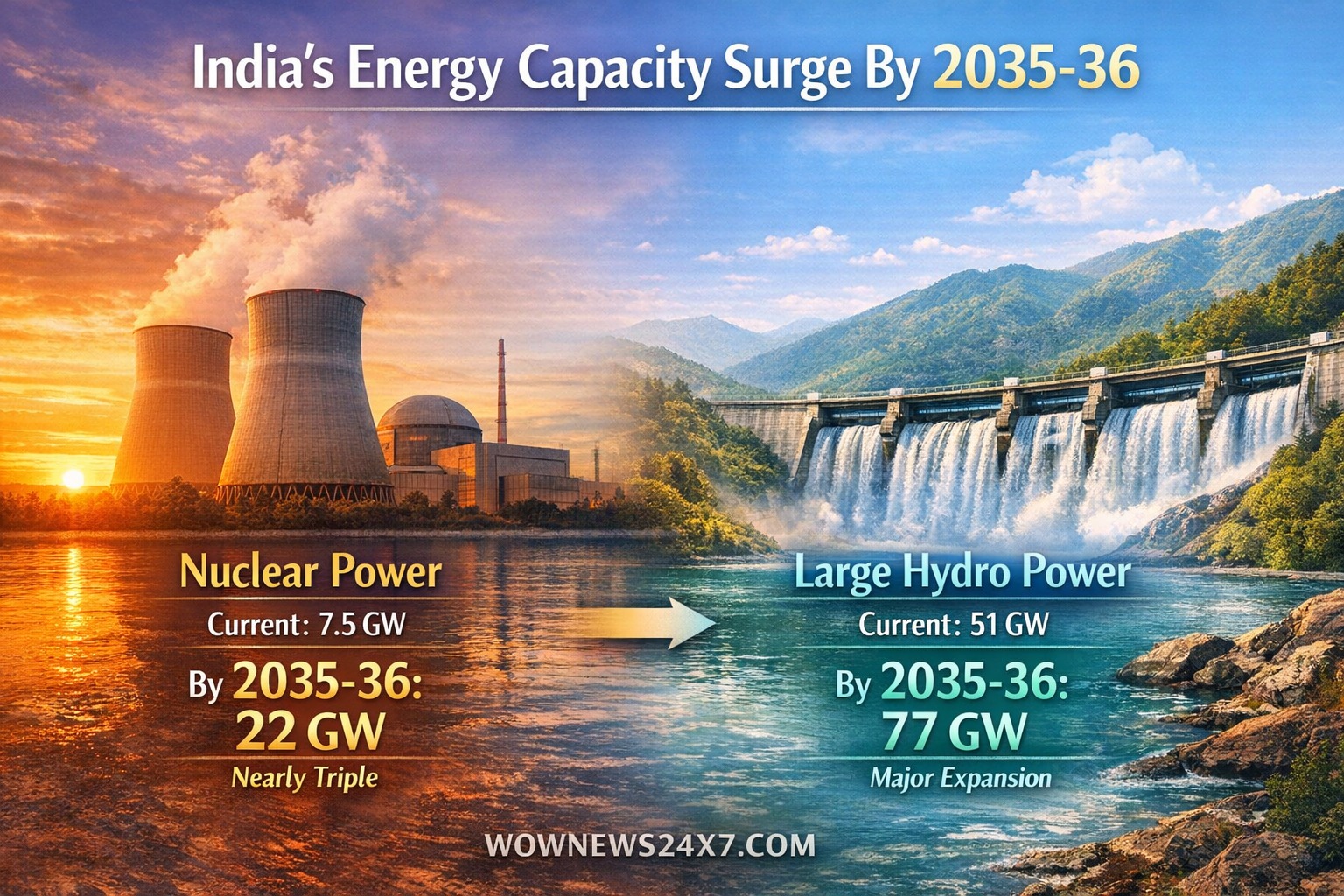
India’s energy sector is poised for a significant transformation, with nuclear capacity projected to nearly triple to 22 GW and large hydro capacity expected to grow to 77 GW from 51 GW by 2035-36. A new policy document outlines this ambitious roadmap to strengthen clean and sustainable power generation.
Show moreStay Ahead – Explore Now! Coal’s Share In India’s Electricity Generation To Fall To 40% By 2035-36: What Does This Mean For India’s Climate Goals And Economy?



Updated: March 18, 2026 18:59

Updated: March 17, 2026 18:26

Updated: March 16, 2026 18:58














Follow WOWNEWS 24x7 on:





Copyright 2024 WOWNEWS 24x7. All rights reserved. The WOWNEWS 24x7 is not responsible for the content of external sites. Read about our approach to external linking.
Powered By Just Imagine
