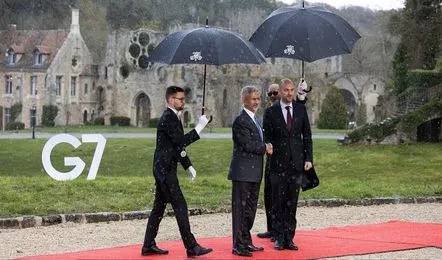




The latest G7 Foreign Ministers’ meeting in France revealed fractures within the Western alliance over the West Asia crisis, while spotlighting India’s growing importance in global diplomacy. External Affairs Minister S. Jaishankar emphasized supply chain resilience, energy security, and the India-Middle East-Europe Economic Corridor (IMEC) as key priorities.
At a high-level gathering near Paris, G7 foreign ministers debated strategies on the escalating conflict in West Asia. The meeting underscored divisions among Western nations, while India’s participation highlighted its emerging role as a stabilizing force in global geopolitics.
Fractures In The West
European leaders expressed frustration at being sidelined in decisions over the conflict, exposing cracks in the Western alliance. Analysts suggest these divisions could weaken collective responses to global crises, creating space for new players to step in.
India’s Expanding Role
Invited as a partner nation, India stressed the importance of resilient trade routes and secure supply chains. Jaishankar highlighted IMEC as a strategic initiative to strengthen connectivity and flagged concerns over disruptions in energy, fertilizer, and food supplies impacting the Global South.
Strategic Outlook
With Prime Minister Narendra Modi set to attend the G7 Leaders’ Summit in June, India’s role in shaping global economic and security discussions is expected to expand, bridging gaps between developed economies and emerging markets.
Key Highlights
-
G7 meet in France dominated by West Asia crisis
-
Fractures emerge among Western nations over conflict strategy
-
India invited as partner, Jaishankar flags supply chain concerns
-
Focus on IMEC to strengthen global connectivity
-
PM Modi to attend G7 Leaders’ Summit in June
Sources: The Indian Express, The Statesman, Zee News, Hindustan Times