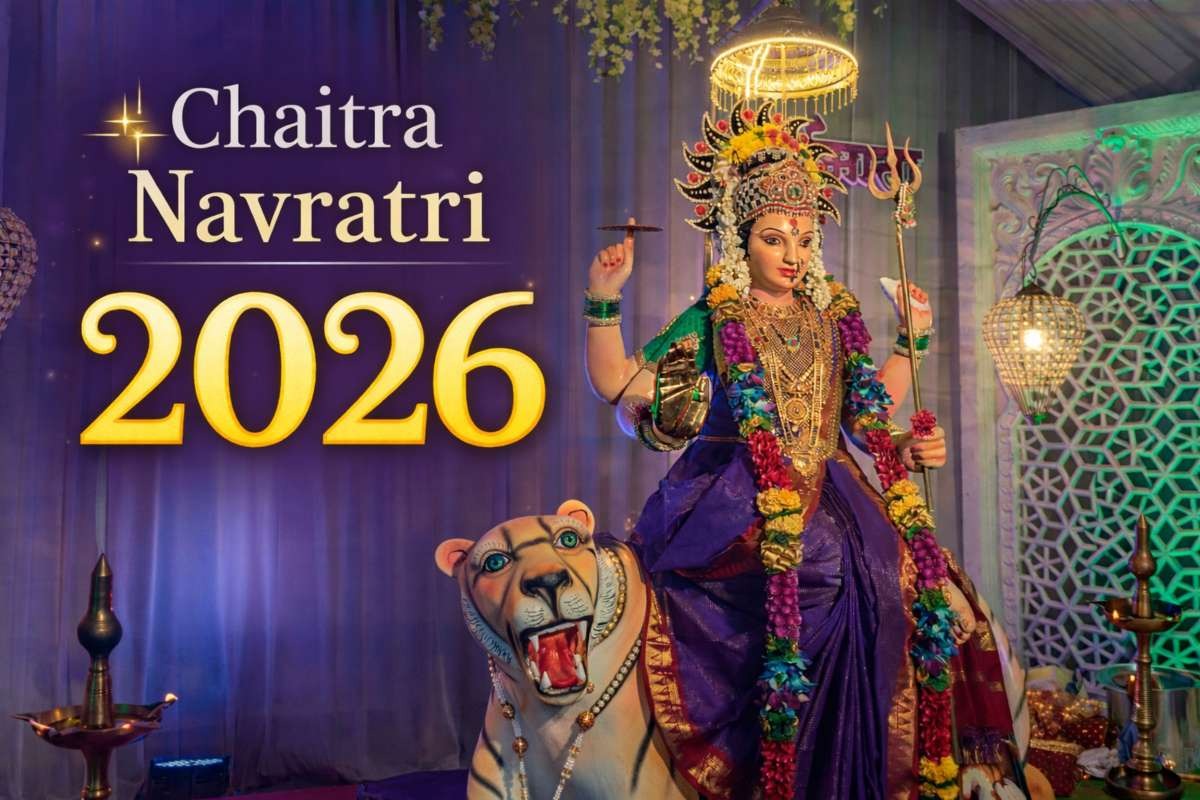



Chaitra Navratri, beginning on March 25, 2026, and concluding on April 2 with Ram Navami, will be celebrated across India with unique regional customs. While the nine-day festival honors Goddess Durga’s nine forms, each state expresses devotion through distinct rituals, cultural practices, and community celebrations.
The festival marks the Hindu New Year in several traditions and the arrival of spring. Devotees observe fasting, prayers, and spiritual introspection, while regional variations add color and diversity to the celebrations.
Regional Traditions
In Uttar Pradesh and Bihar, devotees throng temples, recite Durga Saptashati, and observe strict fasts. The culmination on Ram Navami is marked by grand processions and temple festivities.
In West Bengal, Chaitra Navratri coincides with Basanti Puja, where Goddess Durga is worshipped in her springtime form. Cultural programs and rituals highlight Bengal’s devotional fervor.
In Gujarat, the festival is observed with quiet devotion, focusing on fasting and prayers rather than the garba dances associated with Sharad Navratri.
In Karnataka, Chaitra Navratri overlaps with Gombe Habba, where households display dolls and idols, symbolizing creativity and devotion.
In Maharashtra, families observe fasting and pujas, while temples organize special rituals dedicated to Goddess Durga.
Spiritual Essence
The nine days are dedicated to worshipping the Navdurgas, each day associated with a specific form of the Goddess and a symbolic color. The celebrations emphasize discipline, devotion, and the eternal victory of good over evil.
Festival Highlights
-
Chaitra Navratri begins on March 25, 2026, and ends on April 2
-
Nine days dedicated to worship of Navdurgas
-
Ram Navami marks the birth of Lord Rama
-
Regional variations include Basanti Puja, Gombe Habba, and temple rituals
-
Observed with fasting, prayers, and cultural programs across India
Sources: Outlook India, Hindustan Times, Hindutone