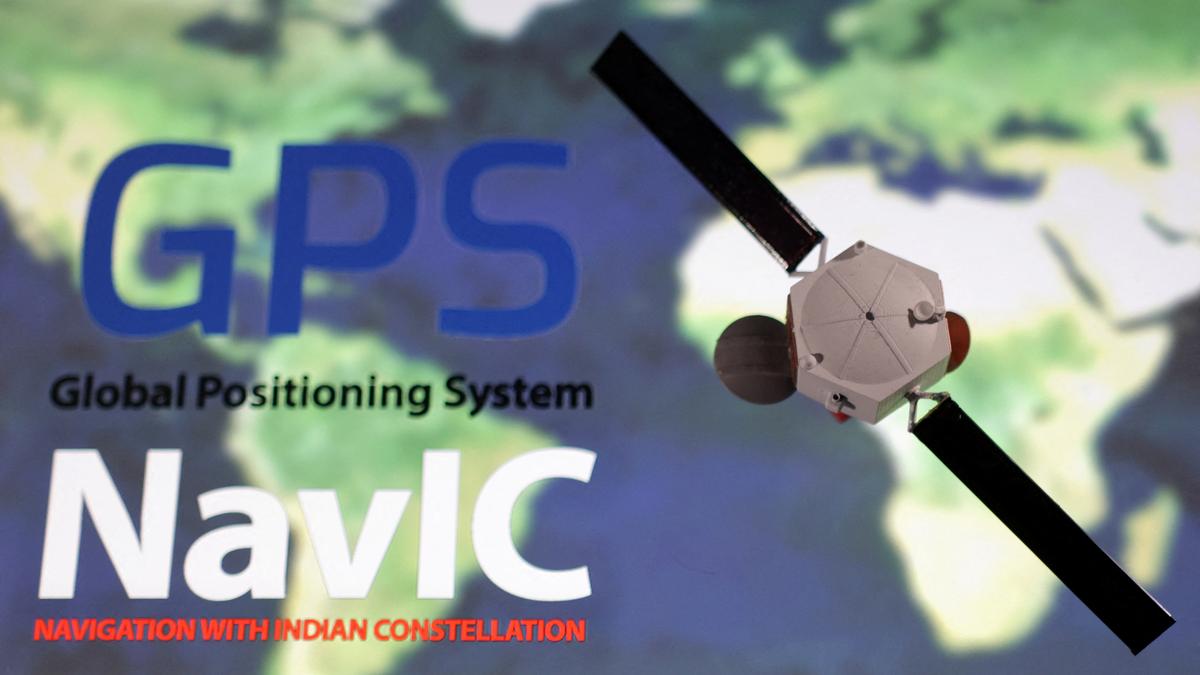


India's homegrown NavIC navigation system faces a critical challenge as the IRNSS-1F satellite malfunctions after a decade in orbit. In a statement on March 13, 2026, ISRO confirmed the failure stemmed from the last onboard atomic clock stopping, leaving only three satellites for precise positioning services.
ISRO announced the IRNSS-1F satellite, launched in 2016, ceased full operations following the atomic clock failure. While the spacecraft remains in orbit for limited one-way broadcast services, its loss impacts NavIC's reliability for location-based applications across India.
Background on NavIC System
NavIC, or Navigation with Indian Constellation, is India's indigenous satellite navigation network designed to provide accurate positioning, navigation, and timing services over Indian regions and beyond. Initiated post-1999 Kargil War to reduce reliance on foreign systems like GPS, the ₹2,250 crore program has launched 11 satellites since 2013. Atomic clocks are vital for these systems, as even minor timing errors can skew location data by hundreds of kilometers.
Details of the Failure
IRNSS-1F had been operating on its final atomic clock after two others failed earlier. The malfunction on March 13, 2026, ended its mission life, reducing operational satellites for full navigation to just IRNSS-1B, IRNSS-1L, and IRNSS-1J (NVS-01). At least four fully functional satellites are needed for robust NavIC coverage, affecting public, railway, and military users.
Key Highlights
-
IRNSS-1F launched March 10, 2016, served 10 years beyond planned life
-
Six NavIC satellites previously failed due to atomic clock issues from early imported models
-
Later satellites like IRNSS-1H and 1I feature upgraded European clocks
-
NavIC ensures GPS-independent services for India's strategic needs
-
ISRO plans replacements but no timeline announced
Implications for Indian Navigation
This setback underscores ongoing challenges in atomic clock reliability for NavIC satellites, potentially disrupting location-based services in India. ISRO has upgraded clock technology since 2016, but experts warn of service gaps until new launches. The agency emphasizes the satellite's partial utility for messaging, signaling resilience in India's space program.
Sources: Moneycontrol, The Hindu, Indian Express