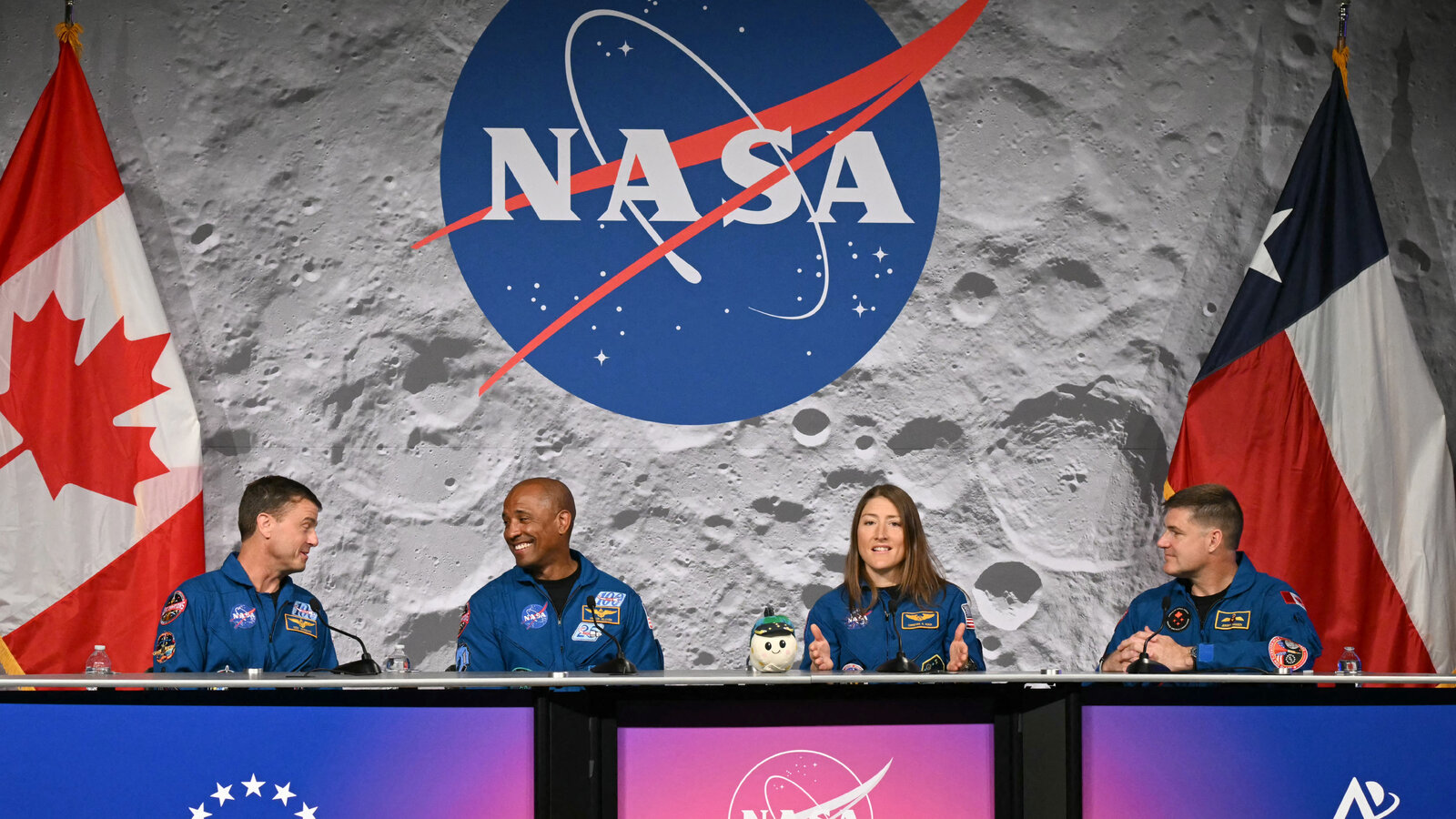

NASA’s Artemis II crew has revealed new insights into their groundbreaking lunar mission, highlighting rigorous training, emotional experiences, and technological milestones. The astronauts emphasized teamwork, resilience, and the mission’s significance in advancing deep-space exploration, paving the way for sustained human presence on the Moon and future missions to Mars.
In the latest briefings following their return, the crew of Artemis II offered a rare, detailed perspective on what it takes to execute humanity’s first crewed mission beyond low Earth orbit in over 50 years. The mission has already been hailed as a defining moment in modern space exploration.
Mission Overview And Historic Milestone
Artemis II marked the first time since 1972 that humans traveled around the Moon, completing a nearly 10-day mission aboard the Orion spacecraft. The four-member crew—Reid Wiseman, Victor Glover, Christina Koch, and Jeremy Hansen—set a new record for the farthest distance traveled by humans from Earth.
The mission followed a free-return trajectory, looping around the Moon’s far side before safely returning to Earth, demonstrating critical deep-space navigation and safety systems.
Training, Technology And Mission Execution
The astronauts highlighted the extensive preparation led by NASA, including simulations, spacecraft systems testing, and emergency readiness drills. Artemis II served as the first crewed test of the Orion spacecraft and the Space Launch System (SLS), validating life-support systems, communication networks, and navigation capabilities.
The mission also pushed engineering limits, with the Orion capsule re-entering Earth’s atmosphere at extreme speeds exceeding Mach 30, while maintaining structural integrity—an important milestone for future missions.
Human Experience And Emotional Impact
Beyond technology, the crew described the journey as deeply emotional and transformative. Viewing Earth from deep space and witnessing the Moon up close created moments of awe, with some astronauts admitting they were moved to tears.
The mission also captivated global audiences, fostering a sense of unity and shared human achievement. Experts noted that Artemis II reignited public fascination with space exploration and inspired collective pride worldwide.
Strategic Importance For Future Exploration
Artemis II is a critical step in NASA’s broader Artemis program, which aims to establish a sustainable human presence on the Moon and eventually enable crewed missions to Mars.
The mission’s success lays the foundation for Artemis III, expected to attempt a human lunar landing and expand scientific exploration and commercial opportunities in space.
Key Highlights
- First crewed lunar mission since Apollo era, completing a 10-day journey
- Orion spacecraft successfully tested with astronauts onboard
- Record-breaking distance achieved during lunar flyby
- Crew emphasized teamwork, resilience, and advanced training
- Mission inspires global unity and future generations of explorers
- Critical step toward Moon landings and long-term Mars ambitions
Sources: NASA official releases, Reuters, Space.com, Times of India, Houston Chronicle