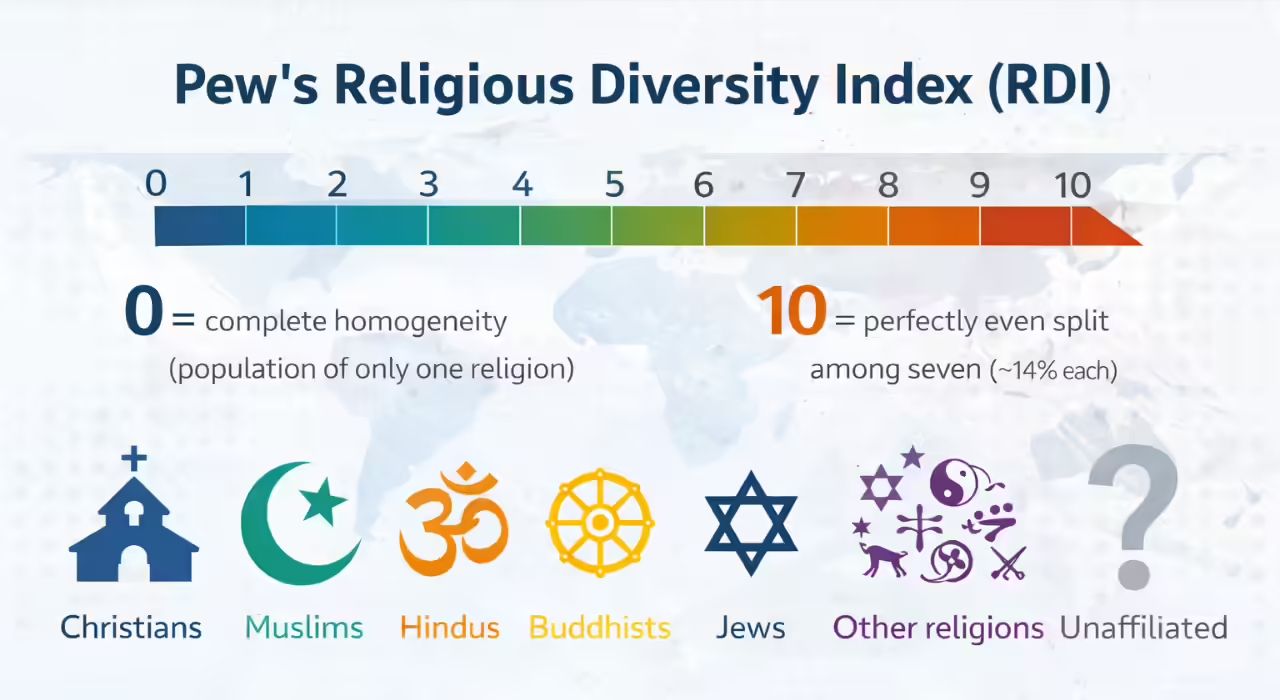





A Pew Research Center 2026 study ranks Singapore as the world’s most religiously diverse nation, scoring 9.3/10 on the Religious Diversity Index. Globally, Christians remain the largest group, while Muslims are the fastest-growing faith. The report, covering 201 countries, highlights shifting demographics and the rise of religiously unaffiliated populations.
The Pew Templeton Global Religious Futures project has released its 2026 findings on religious diversity and global faith trends. Singapore emerged as the most diverse country, with no single majority religion. Its population comprises 31% Buddhists, 20% unaffiliated, 19% Christians, 16% Muslims, 5% Hindus, and 9% others.
Globally, Christianity remains the largest religion, while Islam is expanding at the fastest rate, driven by high fertility rates and youthful demographics in Asia and Africa. The study also notes a significant rise in religiously unaffiliated populations, particularly in Europe and North America, reshaping cultural and political landscapes.
Major Takeaways
-
Singapore ranked world’s most religiously diverse nation, scoring 9.3/10
-
Population split: 31% Buddhists, 20% unaffiliated, 19% Christians, 16% Muslims, 5% Hindus, 9% others
-
Christianity remains the largest global religion
-
Islam identified as fastest-growing faith worldwide
-
Rise of unaffiliated populations reshaping Western societies
-
Study covers 201 countries using 2,700 censuses and surveys
Conclusion
The 2026 Pew study underscores how religious diversity and demographic shifts are reshaping societies worldwide. Singapore exemplifies coexistence without a majority faith, while global trends highlight the growth of Islam, persistence of Christianity, and rise of secular identities, signaling profound cultural and geopolitical implications.
Sources: Pew Research Center, MSN News, Radiance News