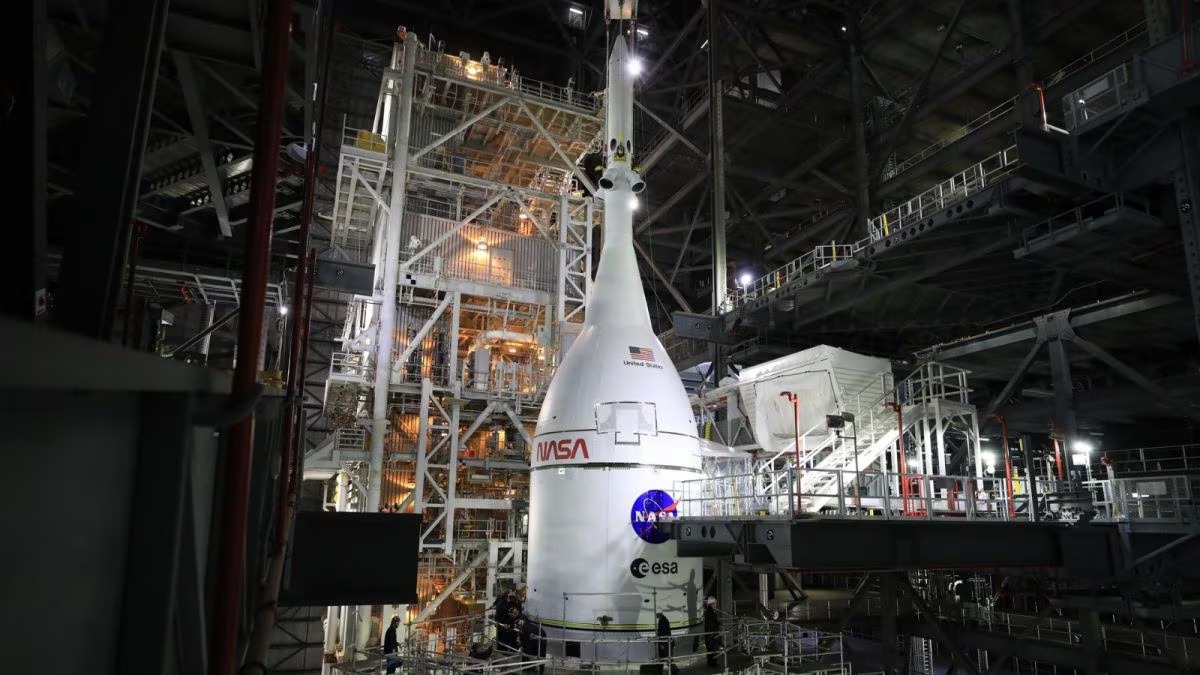




NASA has rolled out its powerful Space Launch System (SLS) rocket to the Kennedy Space Center launch pad in Florida, preparing for the Artemis II mission. This mission will mark the first crewed flight around the Moon in over 50 years, advancing NASA’s goal of sustainable lunar exploration.
The Artemis II mission is a pivotal step in NASA’s Artemis program, which aims to return humans to the Moon and eventually establish a long-term presence. The rollout of the SLS rocket signals the beginning of final preparations for the historic crewed mission.
Artemis II Mission Overview
Artemis II will carry four astronauts on a 10-day journey around the Moon, testing life-support systems and deep-space navigation. Unlike Artemis I, which was uncrewed, this mission will validate spacecraft safety before future lunar landings.
Rocket Rollout And Preparations
The SLS rocket, standing 322 feet tall, was moved from the Vehicle Assembly Building to Launch Pad 39B. Engineers will conduct a series of tests, including fueling rehearsals, to ensure readiness for the scheduled launch later this year.
Significance For Lunar Exploration
NASA views Artemis II as a critical milestone toward establishing a sustainable lunar base and preparing for eventual crewed missions to Mars. The mission demonstrates international collaboration, with contributions from the European Space Agency and other partners.
Key Highlights
-
NASA rolls out SLS rocket for Artemis II
-
Mission will be first crewed lunar flight in 50 years
-
Four astronauts to orbit the Moon for 10 days
-
Tests life-support and navigation systems in deep space
-
Step toward sustainable lunar exploration and Mars missions
Sources: NASA, Space.com, The Verge, Reuters, BBC Science