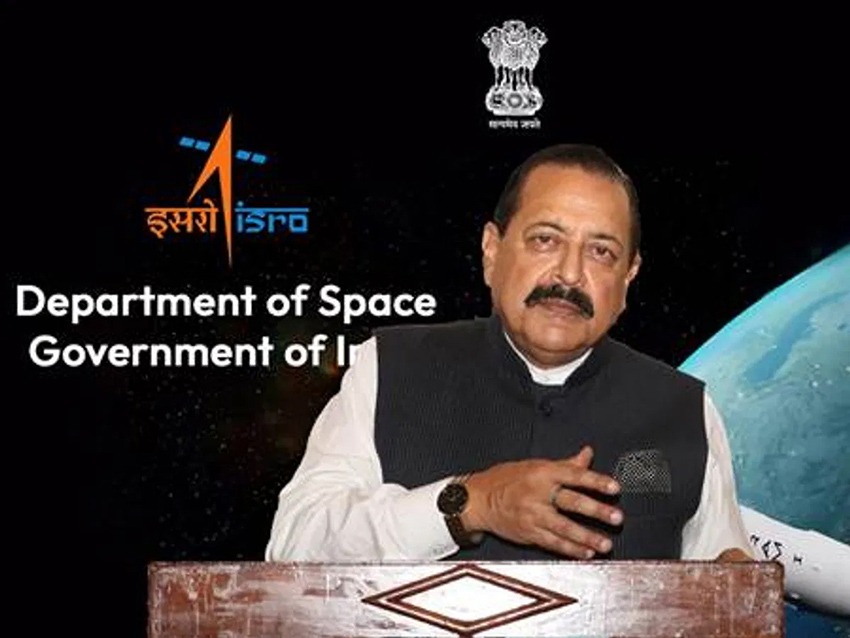



Union Minister Jitendra Singh informed Parliament that 129 trackable pieces of space debris originating from Indian satellite missions are currently orbiting Earth. The debris includes defunct satellites, rocket bodies, and fragments from past missions, raising concerns about orbital safety and the need for sustainable space practices.
In a written reply to the Lok Sabha, Singh highlighted the growing challenge of space debris management. He noted that India is actively working toward minimizing future debris creation through the Debris Free Space Mission (DFSM), which aims for zero debris generation by 2030.
Breakdown Of Debris
According to Singh, the debris includes 23 defunct satellites in low Earth orbit (LEO) and 26 in geostationary orbit (GEO). Additionally, rocket bodies from PSLV (40), GSLV (4), and LVM3 (3) remain in orbit. A significant portion 33 pieces originated from the in-orbit break-up of the PSLV-C3 rocket body.
India’s Debris Free Space Mission
Launched in 2024, the DFSM initiative seeks to ensure that all Indian space actors, both government and private, adopt measures to prevent debris creation. ISRO has already begun implementing strategies such as reserving extra fuel for de-orbiting satellites and exploring advanced technologies like autonomous docking and robotic operations.
Future Outlook
India’s proactive stance on space sustainability is expected to strengthen its global reputation as a responsible spacefaring nation. The DFSM will play a crucial role in ensuring safer orbital environments for future missions.
Key Highlights
-
129 trackable space debris pieces from Indian satellites in orbit
-
Includes 23 defunct satellites in LEO and 26 in GEO
-
Rocket bodies from PSLV, GSLV, and LVM3 remain in orbit
-
33 debris fragments from PSLV-C3 rocket body break-up
-
DFSM initiative targets zero debris creation by 2030
Sources: Daily Excelsior, Devdiscourse