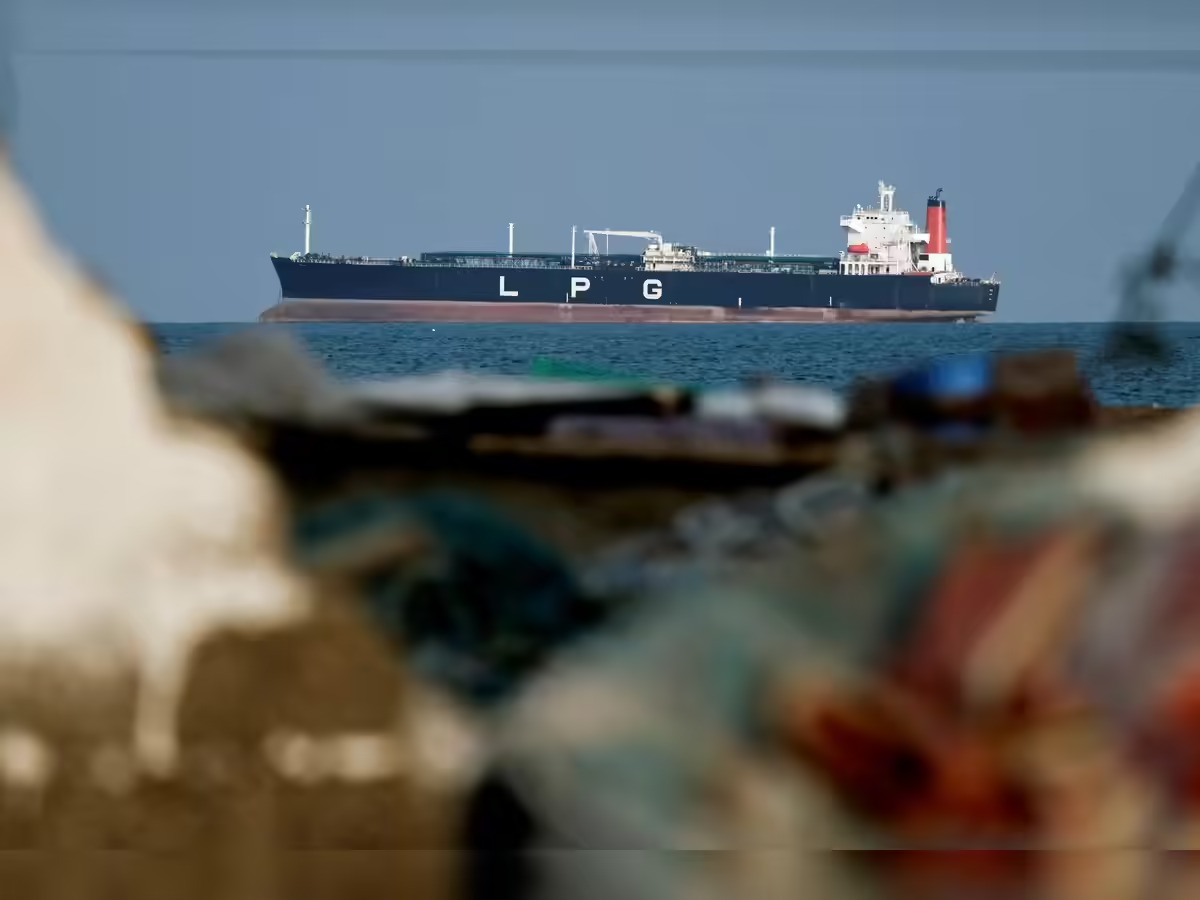



An Indian government official confirmed that tankers carrying 320,000 tonnes of liquefied petroleum gas (LPG) are stranded in the Strait of Hormuz. The Indian Navy is present in the area conducting anti-piracy operations, underscoring both the strategic importance of the waterway and India’s efforts to safeguard energy security.
The Strait of Hormuz, a vital maritime chokepoint for global oil and gas shipments, is witnessing disruption with LPG tankers stranded. India, heavily reliant on imports, is monitoring the situation closely as officials highlight risks to supply chains and price stability.
Strategic Importance Of The Strait
Nearly one-fifth of global oil and gas shipments pass through the Strait of Hormuz. Any disruption here has immediate implications for importing nations, making the current situation particularly sensitive for India’s energy security.
Indian Navy’s Role
Officials confirmed that the Indian Navy is present in the area conducting anti-piracy operations. This deployment aims to ensure maritime safety and protect commercial shipping routes, reinforcing India’s commitment to safeguarding its energy lifelines.
Developments At A Glance
-
Tankers with 320,000 tonnes of LPG stranded
-
Disruption in Strait of Hormuz raises supply concerns
-
Indian Navy deployed for anti-piracy operations
-
India monitoring situation for energy security impacts
-
Potential price volatility in global LPG markets
Future Outlook
Analysts caution that prolonged disruptions could trigger price spikes and logistical challenges. India may need to recalibrate its import strategy, diversify supply routes, and strengthen naval presence to mitigate risks in the Gulf region.
Sources: Reuters, Economic Times, Business Standard, Mint