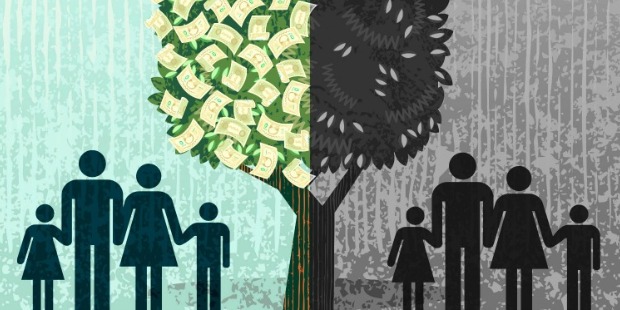

In recent times, there has been a sharp divergence between the wealth of the rich and the poor. As the rich grow richer at a rate unprecedented in history, the poor struggle to enhance their economic position. This contrast serves to raise issues of responsibility and the responsibility of econom...
In recent times, there has been a sharp divergence between the wealth of the rich and the poor. As the rich grow richer at a rate unprecedented in history, the poor struggle to enhance their economic position. This contrast serves to raise issues of responsibility and the responsibility of economic systems to maintain inequality.
Rising Inequality: A Global Phenomenon
Worldwide, inequality has been increasing, with corporations and billionaires seeing their wealth grow in leaps and bounds. It is reported that the five richest individuals have had their wealth more than double since 2020, and that billionaires as a group are $3.3 trillion wealthier than they were at the beginning of the decade. This trend is mirrored in large corporations, which have seen a significant jump in profits, with 148 of the world's biggest corporations raking in $1.8 trillion in profits in the year leading up to June 2023.
The Role of Corporations in Inequality
Corporations are usually named as the drivers of inequality because of their structural privilege and control over economic policy. They profit from monopolies and cronyism, which reinforce wealth gaps. The World Economic Forum argues that tackling inequality involves system changes, such as curbing corporate power and advancing democratic governance in corporations.
Economic Policies and Inequality
Central banks are important for maintaining economic stability, but their policies are likely to have distributional impacts. Cutting interest rates, for example, may help the well-off by raising the value of assets but leaving behind poorer individuals who live on income. A debate continues as to whether central banks should prioritize inflation control or target also equity impacts of their policies, particularly in emerging economies such as India.
India's Point of View towards Inequality
In India, wealth redistribution issues have been dominant, with concepts such as Rahul Gandhi's agenda to map and redistribute wealth. Experts opine that these attempts may not be feasible and will be counter-productive to the economy. India has come a long way in eliminating poverty at the lowest level, yet measuring the extent of wealth amongst the affluent class continues to prove difficult owing to sampling errors in surveys.
Conclusion
The growing gap between the rich and the poor is an urgent problem that calls for holistic solutions. Economic growth may raise all boats, but it does so in an unequal manner, more so for the rich. It will take systemic changes, such as corporate governance and taxation policies, to address inequality and distribute wealth more equally.
Source: Fortune India, World Economic Forum, The Economic Times, World Economic Forum,The India Forum