
Top Searches
- • Tata Motors Launches Intra EV Pickup At ₹1.2 Million, Redefining Affordable Electric Mobility 11 minutes ago
- • Alembic Pharmaceuticals Wins USFDA Nod With 180-Day Generic Drug Exclusivity 19 minutes ago
- • Air India Overhauls Fuel Surcharge Policy As Jet Fuel Prices Surge Globally 25 minutes ago
- • Cellecor Gadgets Approves ₹980 Million Preferential Issue To Accelerate Expansion And Innovation 32 minutes ago
- • Aartech Solonics Secures ₹12.6 Million Order, Strengthening Growth Pipeline 37 minutes ago
- • Amagi Media Labs Unveils NewsPulse: AI-Powered Future Of Multi-Format Content 41 minutes ago
- • Nifty IT Index Surges 2.6% Amid Midday Trading Momentum 47 minutes ago
- • Panacea Biotec Secures Major Win As ₹457 Million Tax Demand Is Nullified By DCIT 54 minutes ago
Loading market data...
Latest Top News
Show more
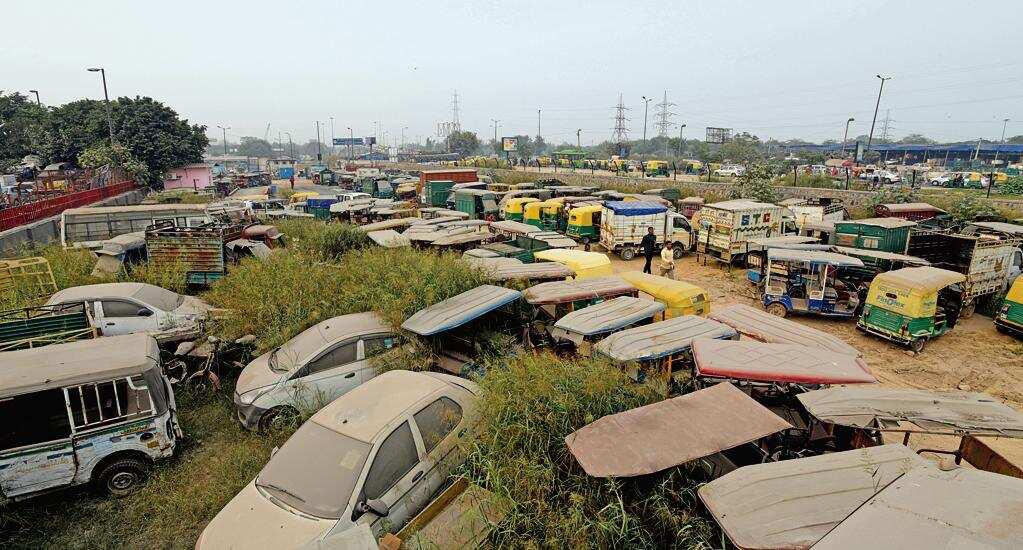
Govt Hits the Brakes: Seeks Auto Data to Scrap Mystery Behind Scrappage Slump!
Unknown
Apr 02, 2026
2 Views
Key Highlights
The Indian government has formally requested detailed data and feedback from the automobile industry to understand the sluggish public response to the national Vehicle Scrappage Policy, despite its environmental and economic objectives
Since its roll-o...
Key Highlights
The Indian government has formally requested detailed data and feedback from the automobile industry to understand the sluggish public response to the national Vehicle Scrappage Policy, despite its environmental and economic objectives
Since its roll-out, the policy mandates phasing out old, polluting vehicles through structured fitness tests and scrappage at registered vehicle scrapping facilities (RVSFs), offering incentives such as tax rebates, registration fee waivers, and discounts on new vehicles
However, uptake has remained limited, with some states and cities reporting scrapping of only a fraction of eligible vehicles compared to new vehicle registrations, prompting government concern
Challenges cited include lack of widespread awareness among vehicle owners, limited availability and accessibility of authorized scrapping centers, bureaucratic hurdles, and perceived insufficient financial incentives to encourage compliance
The Ministry of Road Transport and Highways (MoRTH) aims to analyze industry-submitted metrics on scrappage rates, customer feedback, scrapping facility capacities, and regional adoption patterns
Auto manufacturers and dealers have been asked to share sales data linked to scrappage certificates (which confer rebates), consumer behavior insights, and barriers faced in promoting the scheme to customers
Officials emphasize the need for a collaborative approach between government, industry, and state transport departments to scale up effective communication campaigns, simplify procedures, and expand scrappage infrastructure
The move comes amid mounting urgency to reduce vehicular pollution, curb fossil fuel consumption, boost recycling of end-of-life vehicles, and stimulate demand for newer, cleaner vehicles including electric models
The government expects that by improving policy implementation and awareness via data-backed interventions, it can accelerate the transition to greener, safer roads and energize the automotive sector’s sustainable growth
Understanding the Vehicle Scrappage Policy and Its Incentives
Implemented nationally starting 2022-23, the Vehicle Scrappage Policy applies primarily to private vehicles over 20 years and commercial vehicles over 15 years, which must undergo fitness tests. Vehicles failing are to be scrapped at RVSFs and deregistered.
Registered scrappage grants certificates enabling owners to benefit from up to 25% rebate on road tax for new private vehicle purchases and up to 15% for commercial vehicles
Additional manufacturer discounts and waived registration fees aim to incentivize vehicle replacement, alongside environmental benefits such as reductions in particulate and nitrogen oxide emissions
Despite these provisions, many vehicle owners cite insufficient monetary returns relative to investment, preference for keeping older vehicles, or lack of convenient scrapping facilities as reasons for non-participation
Industry and Regional Response: Data Collection to Identify Gaps
Preliminary figures from regions such as Chandigarh reveal only about 3,000 private vehicles scrapped over 18 months, negligible against 50,000 new registrations during the same period. Similar trends of low scrappage volumes relative to eligible vehicle populations are reported nationwide.
Dealer networks report consumer hesitancy amid opaque processes or fear of losing vehicle value without assured benefits
Limited numbers of certified scrapping centers and complex paperwork act as deterrents
Vehicle owners in rural or semi-urban areas face logistical challenges in accessing RVSFs, compounding uneven regional adoption
Government’s Data-Driven Effort to Revive Scrappage Uptake
To address these concerns, MoRTH is urging manufacturers and industry bodies such as SIAM (Society of Indian Automobile Manufacturers) to submit:
Quantitative data on scrappage certificate issuance linked to vehicle sales discounts
Feedback on consumer sentiment and obstacles encountered in policy promotion
Capacity utilization and geographic distribution of RVSFs
Suggestions for enhancing incentive schemes or streamlining registration and scrapping compliance
Expected Outcomes and Next Steps
The government intends to formulate targeted interventions based on analyzed data, including:
Enhancing public awareness campaigns emphasizing environmental and financial benefits
Facilitating expansion and accreditation of scrapping facilities in underserved regions
Simplifying fitness certification and deregistration norms to lessen bureaucratic delays
Collaborating with automotive dealerships to better incentivize trade-ins coupled with scrappage
Considering policy refinements such as higher rebates or easier access to the scheme
Conclusion
India’s ambitious Vehicle Scrappage Policy holds the promise of transforming the nation’s vehicular landscape by improving air quality, conserving resources, and invigorating the automobile market with cleaner technologies. However, its success hinges critically on resolving implementation challenges revealed through industry data sharing. By harnessing insights from auto manufacturers and dealers, the government aims to revive public interest and participation in scrappage programs, ultimately accelerating India’s journey towards sustainable mobility and environmental stewardship.
Sources: Times of India, Mint, Economic Times
Stay Ahead – Explore Now! Natural Diamonds Shine Amid Price Declines